
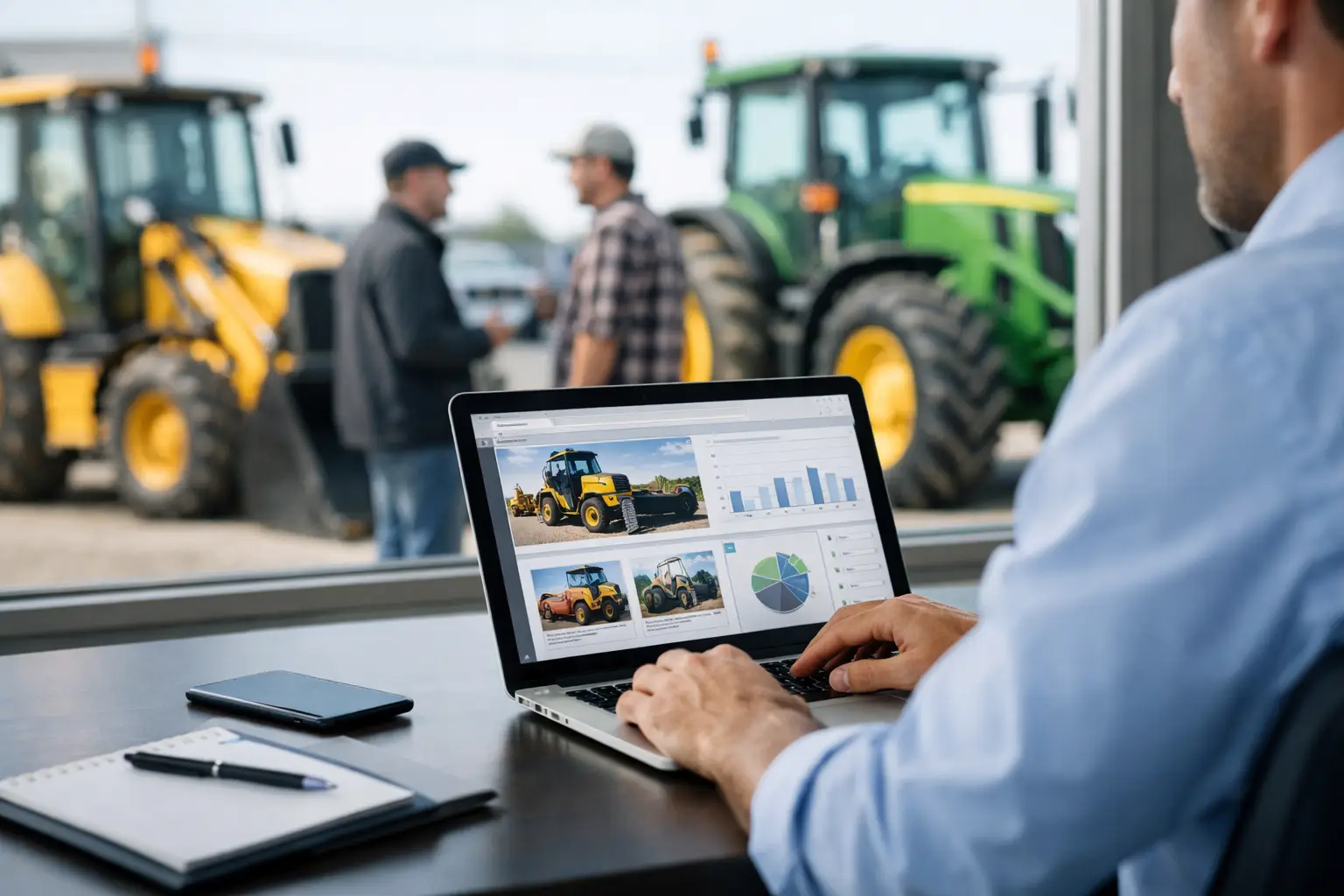
A service manager closes a job, but the parts team is still working off yesterday’s stock figures. Rental has gear out on hire, yet finance is chasing paperwork across separate systems. Sales can see the machine history only if they ring the workshop. This is exactly where machinery dealership software stops being a back-office purchase and becomes an operational decision.
For equipment and capital-goods dealers, the issue is rarely a lack of software. It is too much software doing too little together. A generic accounting package, a workshop tool, spreadsheets for rental, a parts system with gaps, and manual handovers between teams create drag across the whole dealership. The result is familiar - duplicated data, avoidable delays, inconsistent reporting, and poor visibility when leadership needs clear answers.
What machinery dealership software should actually do
Machinery dealership software should support the way a dealership runs across sales, service, parts, rental and finance. That sounds obvious, but many systems still treat these functions as separate islands. In a machinery dealership, they are tightly linked.
A machine sold by the sales team often returns for servicing. That service work depends on parts availability, technician scheduling and warranty handling. Rental assets need utilisation tracking, maintenance planning and accurate billing. Finance needs clean operational data to manage invoicing, costing and cash flow. If those workflows sit in different places, staff spend their time chasing information instead of acting on it.
A dealership-specific platform should bring those functions together in one operational environment. The value is not just convenience. It is control. When teams work from one source of truth, the dealership can price work more accurately, allocate stock with more confidence, track machine history properly and make decisions based on live business activity rather than patchy reports.
Why generic systems fall short in machinery dealerships
A standard business system can manage basic transactions, but dealerships are not basic businesses. They carry complex inventory, service revenue, field work, workshop scheduling, rental utilisation, warranty claims and machine lifecycle activity. That complexity matters.
Generic software usually handles one part of the business reasonably well, then forces the dealership to build workarounds everywhere else. A finance package may be sound for accounts, but weak for service costing. A CRM may support leads, but not installed base tracking or equipment handover workflows. A rental tool may cover contracts, but not connect properly to workshop maintenance and parts consumption.
That fragmentation creates hidden costs. Staff re-enter data. Managers rely on side spreadsheets. Reporting becomes a monthly exercise in reconciliation rather than a daily management tool. Over time, the business starts adapting itself to the limitations of the software instead of the software supporting the business.
This is where specialised machinery dealership software has a clear advantage. It is built around dealership transactions, dependencies and operating rhythms. It understands that workshop labour, parts margins, machine status, rental billing and customer accounts are not separate stories.
The operational gains come from integration, not features alone
Feature lists can look similar on paper. Most systems can claim invoicing, inventory, job cards or reporting. The real difference sits in how those capabilities work together.
Take service as an example. A workshop should not operate in isolation from parts, warranty, customer history and machine records. When a technician’s work, the parts used, the machine’s prior service activity and the final invoice all sit in one connected process, the dealership gains speed and accuracy. It can quote more confidently, reduce billing delays and spot profitability issues earlier.
The same applies to parts. Parts performance is not just about stock on hand. It is tied to service demand, sales support, rental maintenance and procurement decisions. If parts data is disconnected, the dealership either carries excess stock or risks missing revenue because the right item is unavailable at the right time.
Sales and rental also benefit from integration in practical ways. Sales teams can see asset history and customer activity without relying on manual updates. Rental teams can track availability, servicing requirements and billing status without bouncing between systems. Finance gets cleaner transaction data and fewer downstream issues.
That is why the strongest case for machinery dealership software is not that it offers more screens or modules. It is that it reduces operational friction between departments.
What to look for in machinery dealership software
The first requirement is fit for dealership complexity. If a platform has been designed mainly for general trade businesses, wholesale, or standard retail operations, it may struggle with the demands of heavy equipment and capital-goods environments. A good fit means the system reflects real dealership workflows, not a simplified version of them.
The second requirement is end-to-end visibility. Leaders should be able to see what is happening across sales, service, parts, rental and finance without pulling information from multiple sources. Visibility matters at branch level and at whole-of-business level. If reporting depends on manual stitching, trust in the numbers will always be limited.
The third is process discipline without unnecessary rigidity. Good software should standardise key workflows, improve data quality and reduce inconsistency. But it should also recognise that dealership operations vary. A multi-branch machinery dealer, for example, may need tighter controls in some areas and more flexibility in others. The balance matters.
The fourth is practical usability. A system can be comprehensive and still slow people down if screens are cluttered, processes are awkward, or common tasks take too many steps. In a dealership, software is used by service advisors, parts interpreters, workshop staff, rental coordinators and finance teams who need speed and clarity during busy operational days.
Implementation is where good decisions get tested
Selecting the right platform is only part of the job. Implementation exposes whether the dealership is ready to clean up its processes, data and accountabilities.
Many software projects fail because the business expects the new system to solve old discipline problems on its own. It will not. If stock records are inconsistent, pricing logic is unclear, machine data is incomplete or interdepartmental handovers are weak, those issues need attention during implementation. The software can enforce better practice, but it still relies on sound operating decisions.
This is also where leadership alignment matters. Dealer principals and operational leaders need a shared view of what success looks like. For one dealership, the priority may be service profitability and workshop control. For another, it may be rental visibility or cross-branch reporting. Those priorities shape configuration, rollout and training.
There is a trade-off here. A fast implementation can reduce disruption, but rushing decisions around data structure, workflows and user adoption often creates problems later. A slower, more deliberate approach may take more effort upfront, yet usually leads to stronger long-term control.
Why Australian dealerships need a practical lens
Australian machinery dealers often operate across dispersed regions, mixed business models and multiple revenue streams. Some run strong workshop operations with field service demands. Others have large parts businesses, rental fleets or branch networks with different local practices. That makes consistency harder to achieve and visibility harder to maintain.
Machinery dealership software needs to support that reality. It should help standardise core operations without losing sight of branch-level execution. It should support decision-making with timely data, not month-end reconstruction. And it should reduce dependence on staff memory or local workarounds.
This is why dealership leaders are reassessing legacy systems. The pressure is not just technological. It is commercial. When margins tighten, labour costs rise and customer expectations increase, disconnected workflows become harder to justify. A fragmented system landscape does not just create inconvenience. It limits the dealership’s ability to respond quickly, protect margin and scale with confidence.
A platform such as MDMS is relevant in this context because it is built around dealership operations rather than generic administration. That difference matters when the business needs one connected view across the departments that actually drive revenue, cost and customer outcomes.
The right system should make the business easier to run
Good machinery dealership software should make daily operations more controlled, more visible and less dependent on manual intervention. It should help managers spend less time reconciling and more time managing. It should help departments work as part of one business rather than separate functions sharing the same logo.
That does not mean every dealership needs the same setup or the same rollout path. A single-branch operation will have different pressures from a multi-site group. A rental-heavy business will look at priorities differently from a sales-and-service-led dealer. But the principle stays the same - if the software does not reflect how the dealership actually operates, it will struggle to support growth.
The best buying question is not whether the system can tick every box in a demo. It is whether it can give the dealership clearer control over the work that happens every day. If it can do that, the software stops being another system to manage and starts becoming part of how the business moves forward.