Accounts Payable Automation Australia: 2026 Guide
By MDMS Team · 11 July 2026

Accounts Payable Automation Australia: 2026 Guide
Accounts payable automation in Australia is defined as software that captures, validates, routes, and posts supplier invoices digitally, replacing manual data entry and approval bottlenecks from end to end. Australian businesses face compliance requirements that generic global tools often miss, including line-level GST treatment for accurate BAS reporting and continuous ABN validation against ATO records. The result is a finance function that processes invoices faster, catches fraud earlier, and gives your team real visibility over cash flow. This guide covers when to automate, what features matter most, and how to connect AP automation to Xero or MYOB without creating data silos.
What makes accounts payable automation unique for Australian businesses?
Generic AP tools often lack the Australian-specific features that local compliance demands. A platform built for the US or UK market will not automatically handle GST at the line level, validate ABNs, or connect to the Peppol eInvoicing network. These gaps create real risk for Australian finance teams.
The compliance requirements that matter most for local AP automation include:
- Line-level GST coding. Each invoice line must carry the correct GST treatment (taxable, GST-free, or input-taxed) so your BAS reporting is accurate. Header-level GST summaries are not sufficient for ATO compliance.
- Continuous ABN validation. ABN validation on every invoice protects against withholding tax risk and supplier fraud. Validating only at onboarding misses dynamic changes in supplier registration status.
- Peppol eInvoicing support. The Australian government’s Peppol network enables structured digital invoices between businesses. AP platforms that support Peppol reduce manual handling for government and large-enterprise suppliers.
- Vendor bank detail validation. Real-time checks against historical and external bank records detect unauthorized payment redirection before funds leave your account.
- Deep Xero and MYOB integration. Effective accounts payable software for Xero or MYOB publishes complete line-level coded invoices via API, not just header summaries. Shallow integrations push data once and create reconciliation headaches.
Pro Tip: Ask any AP automation vendor to demonstrate line-level GST coding and ABN validation in a live environment before you sign a contract. A demo that only shows OCR extraction is not showing you the full compliance picture.
When should Australian businesses adopt AP automation?
The decision to automate AP comes down to invoice volume and risk exposure. Businesses processing fewer than 20 invoices per month can typically manage effectively using native tools within Xero or MYOB. That threshold changes if your industry carries high fraud risk or if you operate across multiple cost centers.
The 20–100 invoices per month range is where manual processing predictably breaks down. At this volume, your team starts missing approvals, paying duplicates, and failing to catch supplier bank detail changes. These failure points are not random. They are structural weaknesses in manual workflows that automation directly addresses.
- Under 20 invoices per month. Native Xero or MYOB tools are sufficient for most businesses at this volume. The exception is any business in a high-fraud-risk sector, such as construction or professional services, where vendor impersonation is common.
- 20–100 invoices per month. This is the critical adoption zone. Missed approvals, duplicate payments, and undetected bank detail changes become frequent and costly. An accounts payable invoice automation solution pays for itself by eliminating these errors.
- 100+ invoices per month. At this scale, you need purchase order matching, exception handling queues, and multi-level approval routing. Manual processing at this volume creates unacceptable financial and compliance risk.
Entry-level AP automation starts from approximately AU$25 per month, while AI-driven platforms with anomaly detection and bank validation use custom pricing models. The cost of a single duplicate payment or fraudulent bank detail change typically exceeds months of automation subscription fees.
What features power effective AP automation in Australia?
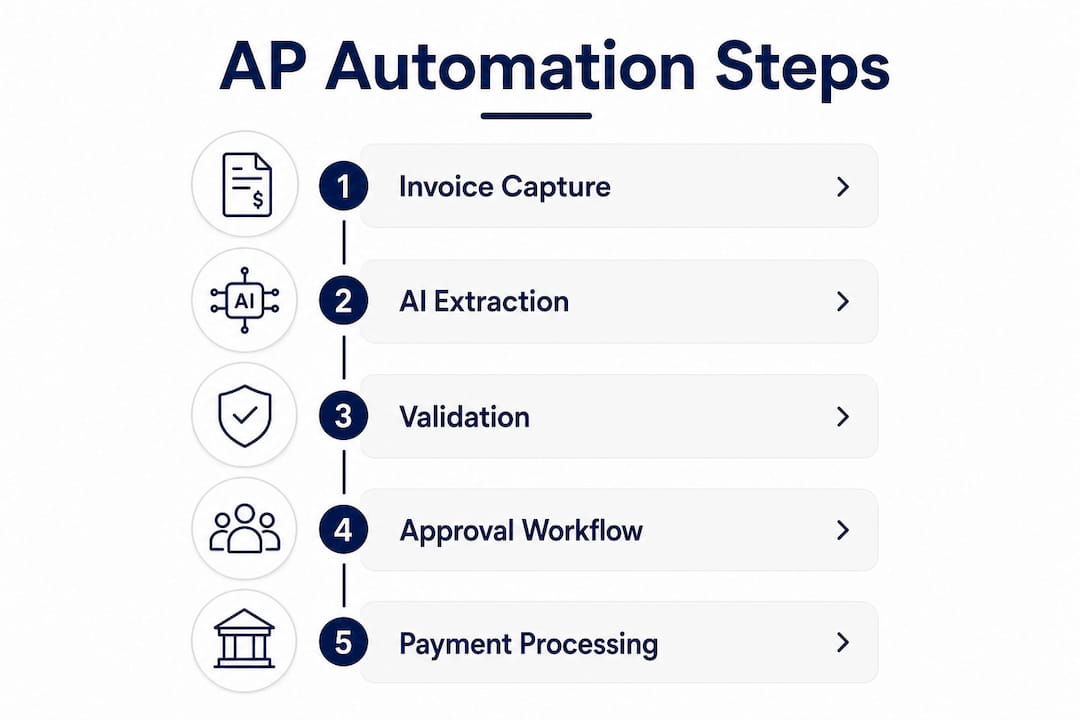
The best AP automation platforms combine AI-driven data extraction with structured validation workflows. The gap between a basic OCR tool and a full AP automation platform is significant, and understanding that gap helps you evaluate options accurately.
Invoice capture and AI extraction
Modern platforms accept invoices from email, supplier portals, scanned PDFs, and Peppol network feeds. AI-enabled OCR extracts header and line-level data, including supplier name, ABN, invoice number, date, line descriptions, quantities, unit prices, and GST amounts. High-performing platforms using AI and managed validation bureaus reach up to 99.9% data accuracy. That level of accuracy eliminates the manual checking that consumes your team’s time.
Automated validation and fraud prevention
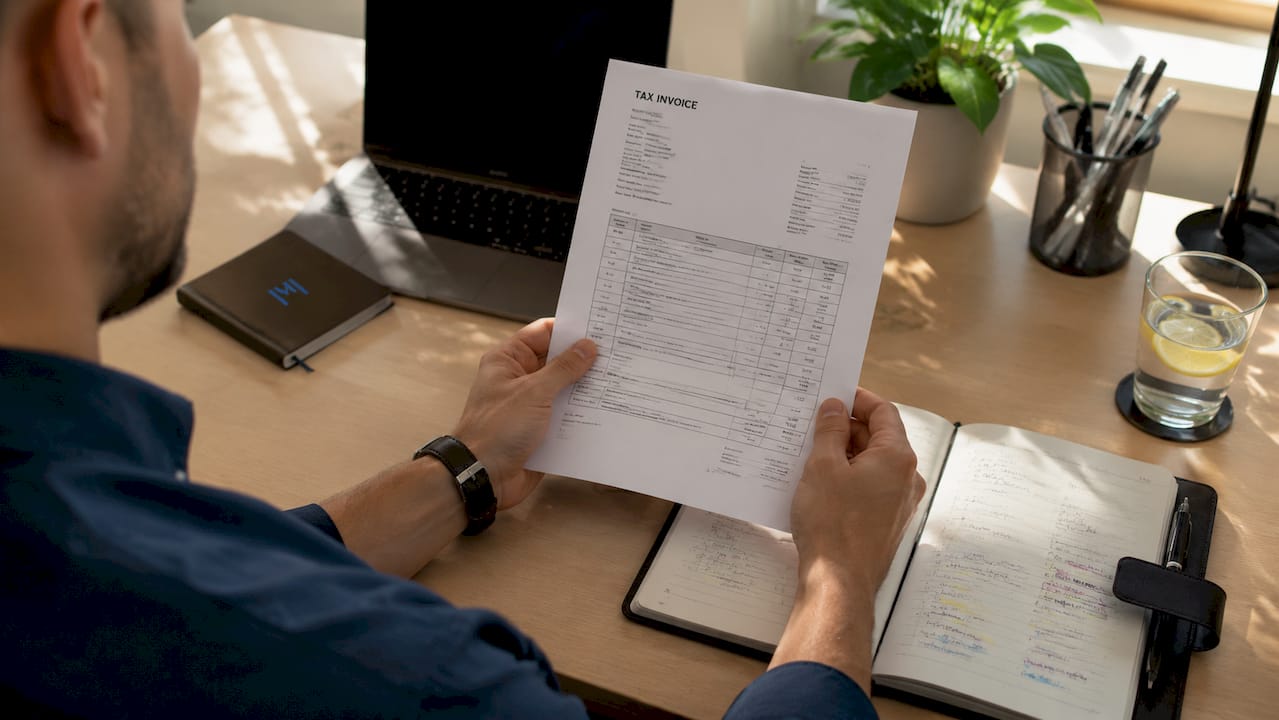
After extraction, the platform runs a series of checks before any human reviews the invoice. These include duplicate detection across invoice number, amount, and supplier combinations; ABN status verification against ATO records; and vendor bank detail comparison against historical payment records. Payment redirection scams are increasing in Australia, and real-time bank detail validation is now a core fraud prevention requirement, not an optional add-on.
Approval workflows and escalation
AP automation platforms configure approval workflows by dollar value, supplier, cost center, or project. Time-based escalation rules automatically reassign approvals when a reviewer does not respond within a set window. This removes the single biggest bottleneck in manual AP: invoices sitting in someone’s inbox while payment terms expire.
| Feature category | Rules-based platforms | AI-native platforms |
|---|---|---|
| Data extraction | Template-dependent OCR | AI learns from invoice history |
| Line-item coding | Manual or fixed rules | Machine learning by supplier |
| Duplicate detection | Exact-match only | Fuzzy matching across variations |
| Fraud detection | Static bank detail check | Dynamic real-time validation |
| Accuracy ceiling | Varies by template quality | Up to 99.9% with managed validation |
AI-driven platforms apply machine learning for line-item coding, vendor validation, duplicate detection, and anomaly flagging across the entire workflow. Rules-based platforms apply logic only at the points where a developer wrote a rule. The difference shows up in exception rates and staff time spent on corrections.
Pro Tip: When evaluating payables automation software, ask vendors to show you where AI applies in their workflow. If the answer is “just at extraction,” you are looking at a rules-based platform with an AI label.
How do you integrate AP automation with Australian finance systems?
Integration quality determines whether AP automation delivers its full value or creates a new layer of manual reconciliation. The accounting system, whether Xero, MYOB, or an ERP, must remain the definitive ledger of record. The AP platform feeds it; it does not replace it.
Successful AP automation maintains accounting systems as the ledger of record by deeply syncing chart of accounts, tracking categories, tax codes, and supplier data via APIs. This two-way sync is what separates a proper accounts payable integration tool from a simple file export.
The integration checklist for Australian finance teams:
- Pull current chart of accounts and tax codes from Xero or MYOB before coding any invoice. Coding to a stale chart creates reconciliation errors.
- Sync tracking categories so line-level costs post to the correct department, project, or location without manual adjustment.
- Publish approved invoices with full line-level data, including GST treatment per line, not just totals. Your finance software needs this detail for accurate BAS preparation.
- Sync supplier records bidirectionally so bank detail updates in your accounting system reflect in the AP platform and vice versa.
- Avoid parallel ledgers. If your AP platform stores approved invoices without pushing them to the accounting system in real time, you have created a data silo that will cause discrepancies at month end.
The most common integration failure is treating the AP platform as the system of record. Data should travel once: from the supplier, through the AP platform for validation and approval, and then into the accounting system as the final posted entry.
Key Takeaways
AP automation in Australia delivers the most value when it combines AI-driven extraction, continuous ABN validation, real-time bank detail checks, and deep line-level integration with Xero or MYOB.
| Point | Details |
|---|---|
| Volume threshold matters | Businesses processing more than 20 invoices per month face structural manual process failures that automation directly fixes. |
| Australian compliance is non-negotiable | Line-level GST coding and continuous ABN validation are required for BAS accuracy and ATO compliance. |
| Fraud prevention is a core feature | Real-time vendor bank detail validation protects against payment redirection scams, which are increasing in Australia. |
| AI outperforms rules-based tools | AI-native platforms reach up to 99.9% accuracy and apply machine learning across the full workflow, not just extraction. |
| Integration depth determines ROI | Deep two-way API sync with Xero or MYOB prevents data silos and ensures accurate ledger postings at month end. |
AP automation is a strategic finance asset, not just a cost-cutting tool
The framing of AP automation as a cost reduction exercise misses its real value. When your AP function validates every ABN, checks every bank detail change, and routes every invoice through a documented approval workflow, you have built a compliance and fraud prevention system that runs continuously without adding headcount.
The teams we see getting the most from AP automation are not the ones who implemented it to save time on data entry. They are the ones who recognized that their AP function was a liability. Missed approvals, duplicate payments, and undetected supplier fraud were not occasional problems. They were predictable outcomes of a manual process operating above its capacity.
The shift to AI-native platforms matters more than most finance teams realize. A rules-based platform will handle the invoices it was configured for. An AI-native platform learns from your supplier history and improves its coding and validation accuracy over time. That compounding accuracy is where the real efficiency gains accumulate.
Fraud prevention deserves more attention than it typically gets in AP automation discussions. Payment redirection scams target businesses at the exact moment a supplier relationship is established or a bank detail changes. An AP platform that only checks bank details at onboarding is not protecting you from the most common attack vector. Dynamic, real-time validation on every payment run is the standard your platform should meet.
Evaluate vendors on three criteria beyond price: where AI applies in the workflow, how ABN validation works on a per-invoice basis, and how deeply the platform integrates with your accounting system at the line level. Those three questions will separate platforms that solve the problem from platforms that look like they do.
— Moderndms
Moderndms and AP automation for Australian equipment dealers
Australian equipment dealers manage AP across multiple departments, including parts purchasing, rental fleet costs, and service supplier invoices. Moderndms is built to handle that complexity within a single platform.

Moderndms integrates with Xero to publish line-level coded invoices directly to your accounting system, keeping your finance department in control of the ledger without manual re-entry. The platform supports multi-department approval workflows, so a parts invoice and a rental maintenance bill each route to the right approver automatically. For equipment dealers managing high invoice volumes across sales, service, and parts, Moderndms replaces the manual bottlenecks that slow down month-end close and create compliance risk. Setup takes under an hour, and your data stays yours with no lock-in.
FAQ
What is accounts payable automation in Australia?
Accounts payable automation in Australia is software that captures supplier invoices, validates ABNs and GST treatments, routes invoices for approval, and posts them to your accounting system without manual data entry.
How many invoices per month justify AP automation?
Businesses processing more than 20 invoices per month typically encounter manual process failures such as missed approvals and duplicate payments that make automation cost-effective.
Does AP automation work with Xero in Australia?
Yes. Effective accounts payable software for Xero connects via API to sync chart of accounts, tax codes, and tracking categories, then publishes approved invoices with full line-level GST data to keep your BAS accurate.
What is the difference between rules-based and AI-native AP automation?
Rules-based platforms apply fixed logic only where a developer wrote a rule, while AI-native platforms apply machine learning across extraction, coding, duplicate detection, and fraud validation, reaching up to 99.9% data accuracy.
How does AP automation prevent payment fraud in Australia?
AP automation prevents payment fraud by running real-time checks on vendor bank details against historical and external records, detecting unauthorized changes before any payment is processed.