What Is Asset Lifecycle Tracking and Why Does It Matter?
By MDMS Team · 24 August 2026
What Is Asset Lifecycle Tracking and Why Does It Matter?
Asset lifecycle tracking gives you a single, auditable view of every asset from acquisition to disposal so you can decide, with evidence rather than guesswork, whether to maintain, refurbish, or replace it. That visibility is what separates a maintenance team reacting to breakdowns from one running a funded, prioritized capital plan.
The payoff shows up in uptime, audit-readiness, and return on capital. Programs built around ISO 55000 and ISO 55001 treat life cycle management as a required part of operational planning, not an afterthought bolted onto a spreadsheet. Condition grading and remaining useful life (RUL) estimates give you the trigger points to act before a failure forces the decision for you. And for equipment dealers, installed-base practice turns every serial number sold into a tracked asset that can generate service revenue, warranty recoveries, and renewal opportunities for years afterward.
What a working program actually delivers:
- A single source of truth for every asset’s location, condition, and history
- Early warning on assets approaching the end of their useful life
- Defensible data for capital budgeting and audits
- A pipeline of renewal and service opportunities instead of one-off transactions
Key Takeaways
Asset lifecycle tracking works because it turns condition data, maintenance history, and financial records into one auditable trail that drives maintain-versus-renew decisions before failures force them.
| Point | Details |
|---|---|
| Track every stage, not just operation | Planning and acquisition data (cost, expected life) feed the capital forecasts that maintenance data alone can’t produce. |
| Anchor records to serial numbers | A serial-anchored register links warranty, service history, and renewal opportunity to one traceable asset. |
| Use condition grades to trigger action | Grades of 3 to 4 typically call for renewal planning within 6 to 12 months; grades 5 to 7 need a maintain-versus-renew analysis. |
| Aim for an 80:20 maintenance ratio | Mature programs shift from reactive repairs toward planned maintenance as condition data feeds decisions earlier. |
| Choose a connected, dealer-shaped platform | Moderndms unifies sales, service, parts, rental, and finance around one serial-anchored record with Xero integration. |
Table of Contents
- The Four Stages of Asset Lifecycle Tracking
- How Does Asset Lifecycle Tracking Actually Work?
- What Metrics Should You Track for Asset Condition?
- Governance and Best Practices for Lifecycle Programs
- How Do You Roll Out an Asset Lifecycle Tracking Program?
- Why Dealer-Focused Platforms Handle the Full Lifecycle Better
- What Experienced Programs Get Right (and Wrong)
- A Purpose-Built Alternative to Spreadsheets and Legacy Software
- Sources
- FAQ
The Four Stages of Asset Lifecycle Tracking
Every asset moves through four stages, and each one generates data the next stage depends on. Skip a step here, and you’re troubleshooting blind three years later.
- Planning. You define the need, the budget envelope, and the expected service life before you buy anything. This is where you set the risk tolerance and decide whether the asset is critical enough to warrant a dedicated maintenance schedule from day one.
- Acquisition and procurement. The asset gets a unique ID, and you log the purchase price, supplier, warranty terms, and install date. This is also where serial numbers get anchored to the record permanently, a step dealers and heavy-asset operators skip more often than they should.
- Operation and maintenance. Every work order, inspection, part replacement, and condition score gets attached to that same asset ID. This stage produces the bulk of your data and, over time, your best evidence for predicting what breaks next.
- Disposal or renewal. You compare remaining useful life, current condition grade, and replacement cost against keeping the asset running, then document the decision and the resale, scrap, or trade-in value.
The records worth keeping at each stage include:
- Unique asset ID and serial number
- Install date and warranty expiry
- Purchase cost and expected service life
- Maintenance and inspection history
- Current condition grade and estimated RUL
Capital planning teams lean on acquisition-stage data (cost, expected life) to forecast future budgets, while maintenance teams lean on operation-stage data (failure history, condition trends) to decide what to fix this quarter. Both views come from the same record. That’s the point.
How Does Asset Lifecycle Tracking Actually Work?
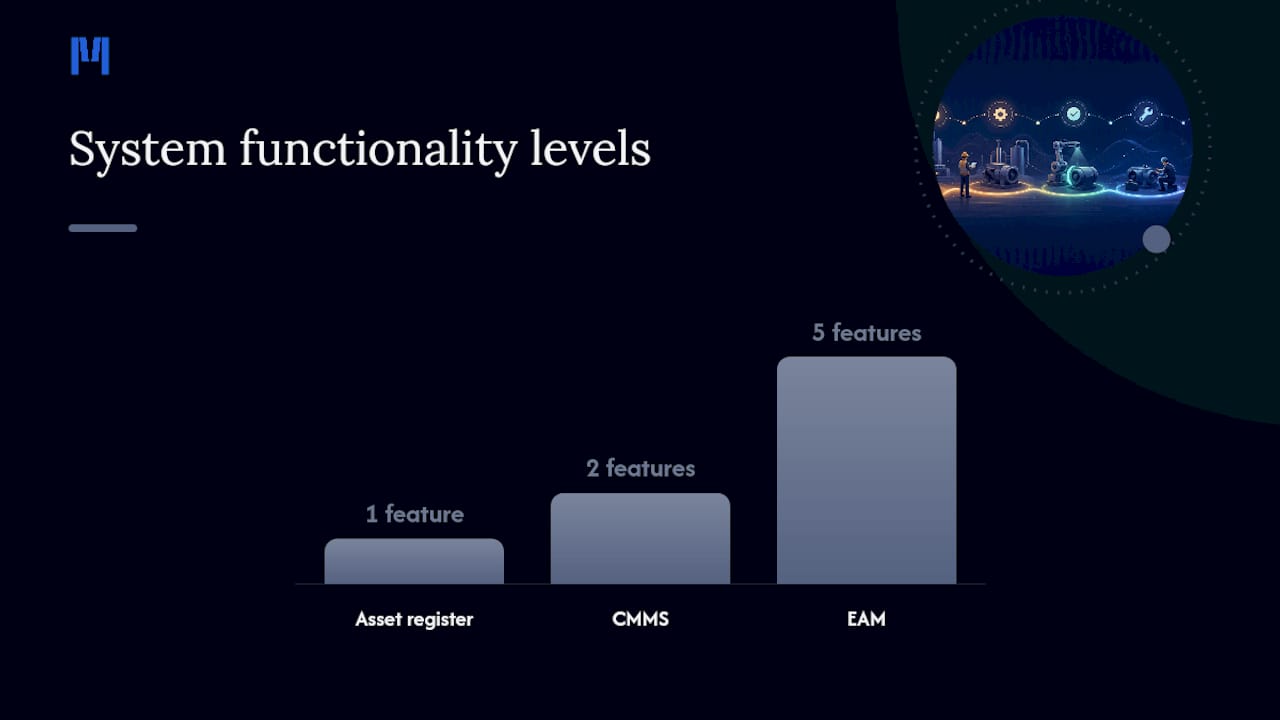
Three types of systems handle this job, and they’re not interchangeable. An asset register is the foundational list: what you own, where it is, and its key attributes. A CMMS (computerized maintenance management system) builds on that register to schedule and track work orders. An EAM (enterprise asset management) platform goes further still, layering in inspection templates, reporting, and document management to produce audit-defensible records that support both maintenance planning and capital budgeting.
For equipment-heavy businesses, the register needs to be serial-anchored rather than category-anchored. A “forklift” line item tells you nothing useful. A specific serial number tied to a customer, an install date, and a service history tells you exactly when the warranty expires and when the machine is due for a rebuild. That distinction is the backbone of installed-base management for dealers and fleet operators alike.
Field capture technology determines how clean that data actually is:
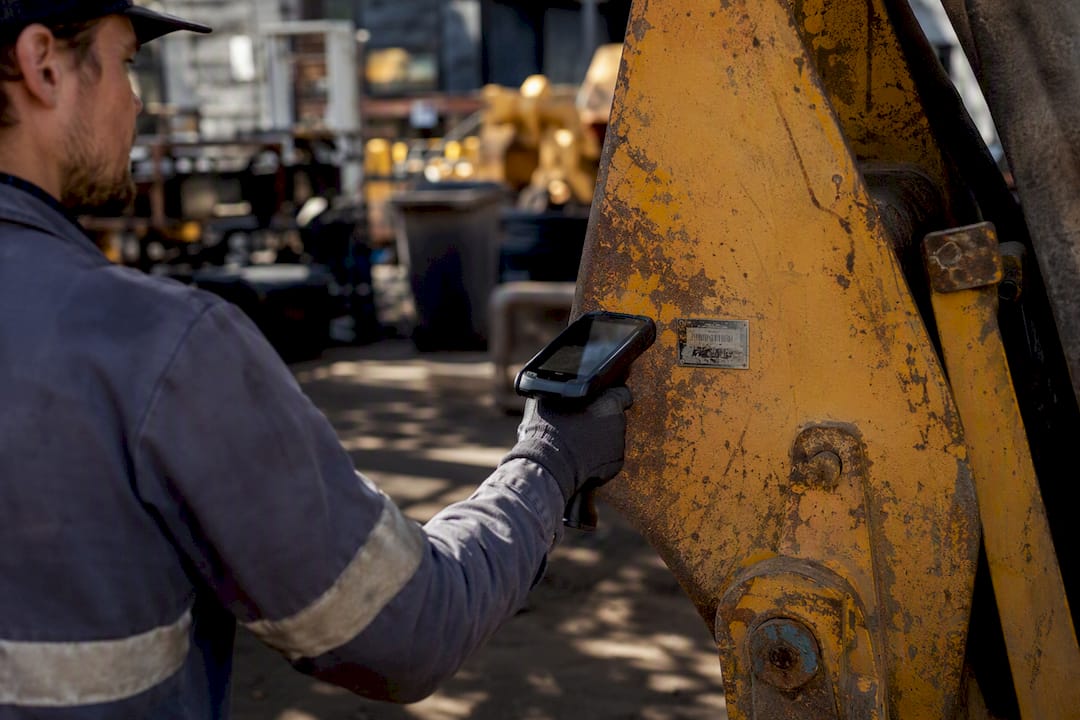
- Serial and QR codes work well for low-cost, low-frequency scanning, like recording a service visit or a location move.
- RFID earns its cost when you need bulk or hands-free scanning across a yard or warehouse, where scanning barcodes one by one wastes labor.
- IoT sensors justify their expense on high-value, high-downtime-cost assets where continuous condition monitoring feeds predictive maintenance models rather than periodic manual inspection.
Data should travel once. Capture happens in the field, flows into a work order, updates the asset’s history, and rolls up into analytics and finance without anyone re-keying it into a second system. That last part matters more than it sounds: connected ERP setups that carry a unit from acquisition through service, rental, and resale eliminate the re-entry that causes most asset-register drift.
Pro Tip: Before buying any tracking technology, map your actual data flow on a whiteboard first. Most “system” problems are really integration gaps between a register that doesn’t talk to your work-order software.
What Metrics Should You Track for Asset Condition?
Condition assessment is what turns a pile of maintenance logs into a decision. Most programs use a 1 to 10 grading scale, where 10 means new and 1 means failed. Grades of 3 to 4 typically trigger renewal planning within a short time frame, while grades in the mid range call for a maintain-versus-renew economic comparison rather than an automatic replacement decision.
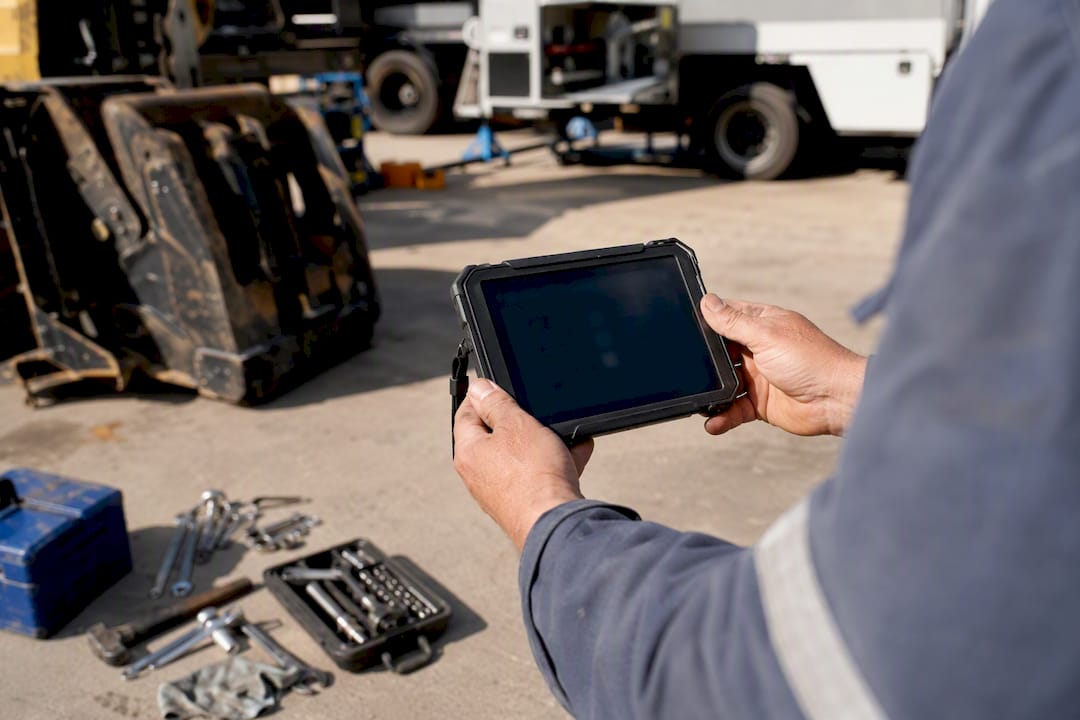
Remaining useful life estimates convert that condition score into a timeline. An asset graded 4 with a service history showing accelerating repair costs might have an RUL of eight months; the same grade on an asset with a flat cost curve might stretch to two years. Feeding that estimate into a rolling capital plan is how 10-year lifecycle planning works in practice: years one through three get firm funding, years four through ten stay indicative and get revised annually as new condition data comes in.
Risk matrices add the second dimension planners often skip: consequence of failure multiplied by likelihood of failure. A low-condition asset with low failure consequence can wait. A moderate-condition asset feeding a critical process line usually can’t, regardless of what the grade alone suggests. Safety-critical failures bypass the economic analysis entirely and trigger immediate action.
The KPIs worth watching on a monthly dashboard:
- Uptime percentage by asset class, tracked against your baseline
- Mean time between failures (MTBF), which flags assets degrading faster than expected
- Maintenance cost per asset, which reveals when repair spend is outpacing replacement value
- Planned-to-reactive maintenance ratio, where mature programs run closer to 80:20 in favor of planned work
A ratio stuck near 50:50 usually means your condition data isn’t feeding decisions early enough to get ahead of failures.
Governance and Best Practices for Lifecycle Programs
None of this holds up without governance, and governance starts with a data model everyone actually uses. Every asset needs a unique ID that never changes, a controlled vocabulary for status and condition fields (so “fair” doesn’t mean five different things to five different technicians), and one designated system of record instead of three competing spreadsheets.
Assign these roles explicitly rather than letting them default to whoever’s available:
- Asset owner — accountable for the asset’s performance and budget
- Asset steward — responsible for day-to-day data accuracy and updates
- Maintenance lead — authorizes work orders and signs off on condition assessments
Australian asset-management practice increasingly frames this as continuous improvement rather than a one-time setup: align asset decisions with business objectives, set clear accountability, and document service-delivery standards that are revisited, not filed away.
Mapping your program to ISO 55001 gives you a structure auditors and finance teams already recognize, since the standard treats life cycle management as a required element of operational planning and control, not a nice-to-have add-on.
Audit-readiness isn’t a separate project bolted onto asset tracking. It’s what a clean data model produces automatically when ownership, terminology, and records are consistent from day one.
How Do You Roll Out an Asset Lifecycle Tracking Program?
Start narrow, prove value, then expand. Trying to register every asset class in month one is the single most common way these programs stall.
- Audit your current state. Inventory what you actually own, where the records live, and where the gaps are. This step alone often surfaces assets nobody realized were still in service.
- Register your critical assets first. Fix the top five to ten attributes (unique ID, install date, condition, warranty) rather than trying to perfect every field for every asset.
- Pilot one asset class. Pick a category with clear ownership and measurable pain (excessive downtime, unclear warranty status) and run the full workflow before scaling.
- Integrate the register with work orders and finance. This is the year one to three phase where planned maintenance should climb toward that 80:20 planned-to-reactive ratio.
- Standardize inspections and condition templates so every technician scores the same way, then scale to the next asset class once the pilot’s KPIs hold steady.
When evaluating tools, check for: who owns the exported data, whether the mobile app works offline in the field, whether it supports a serial-anchored installed-base model, and whether it connects to your accounting platform without manual re-entry.
Pro Tip: Baseline your KPIs before the pilot starts, not after. Without a “before” number for uptime or maintenance cost per asset, you can’t prove the pilot worked, and that proof is what gets you budget for phase two.
Why Dealer-Focused Platforms Handle the Full Lifecycle Better
Equipment dealers face a version of this problem generic asset trackers weren’t built for: every unit sold becomes a long-term revenue relationship, not a closed transaction. A serial number tied to a customer, an install date, and a warranty term is what lets you flag a warranty expiring in 60 days and turn it into a service booking or a renewal conversation, months before the machine actually fails.
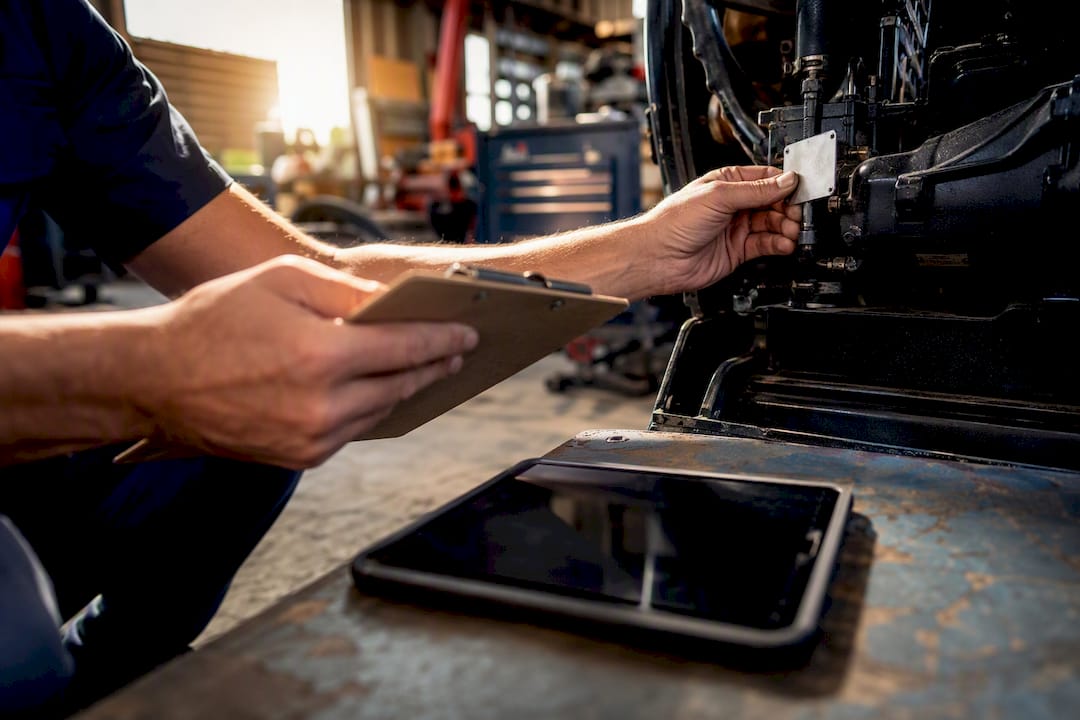
That workflow, sale to service history to warranty alert to renewal opportunity, only works when the data lives in one connected system.
Moderndms was built around that reality, with:
- Modular rollout so you adopt sales, service, parts, or rental tracking on your own timeline
- Setup measured in under an hour, not weeks of configuration
- Complete data ownership with no lock-in if you ever migrate
- Xero integration so financial data doesn’t need re-entry
- Documented time savings of up to 10 hours a week in administrative work for teams that switch
What Experienced Programs Get Right (and Wrong)
The programs that stall almost always share the same root cause: fragmented spreadsheets that nobody owns. One team tracks serial numbers in Excel, another logs service history in a separate tool, and by the time anyone needs both, the records don’t match. Missing serial anchors compound the problem. Without one, you can’t reliably connect a sale to its service history five years later.
Mature programs look different. They run on one data model instead of three, with clear ownership assigned before the first asset gets registered. They build renewal pipelines proactively, flagging warranty expirations and condition-grade drops months in advance instead of reacting to a phone call. And they measure the same handful of KPIs, uptime, planned-to-reactive ratio, cost per asset, month over month rather than reinventing metrics for each report.
If you’re pushing this culturally, don’t try to convert the whole organization at once. Pilot one asset class, publish the win in terms leadership cares about (hours saved, downtime avoided), and use that proof to get executive sign-off on the governance rules before you scale further.
A Purpose-Built Alternative to Spreadsheets and Legacy Software
If your lifecycle data is scattered across spreadsheets, a decades-old parts system, and a separate accounting tool, Moderndms consolidates that into one platform built specifically for equipment dealerships, not a generic asset tracker retrofitted for your industry.
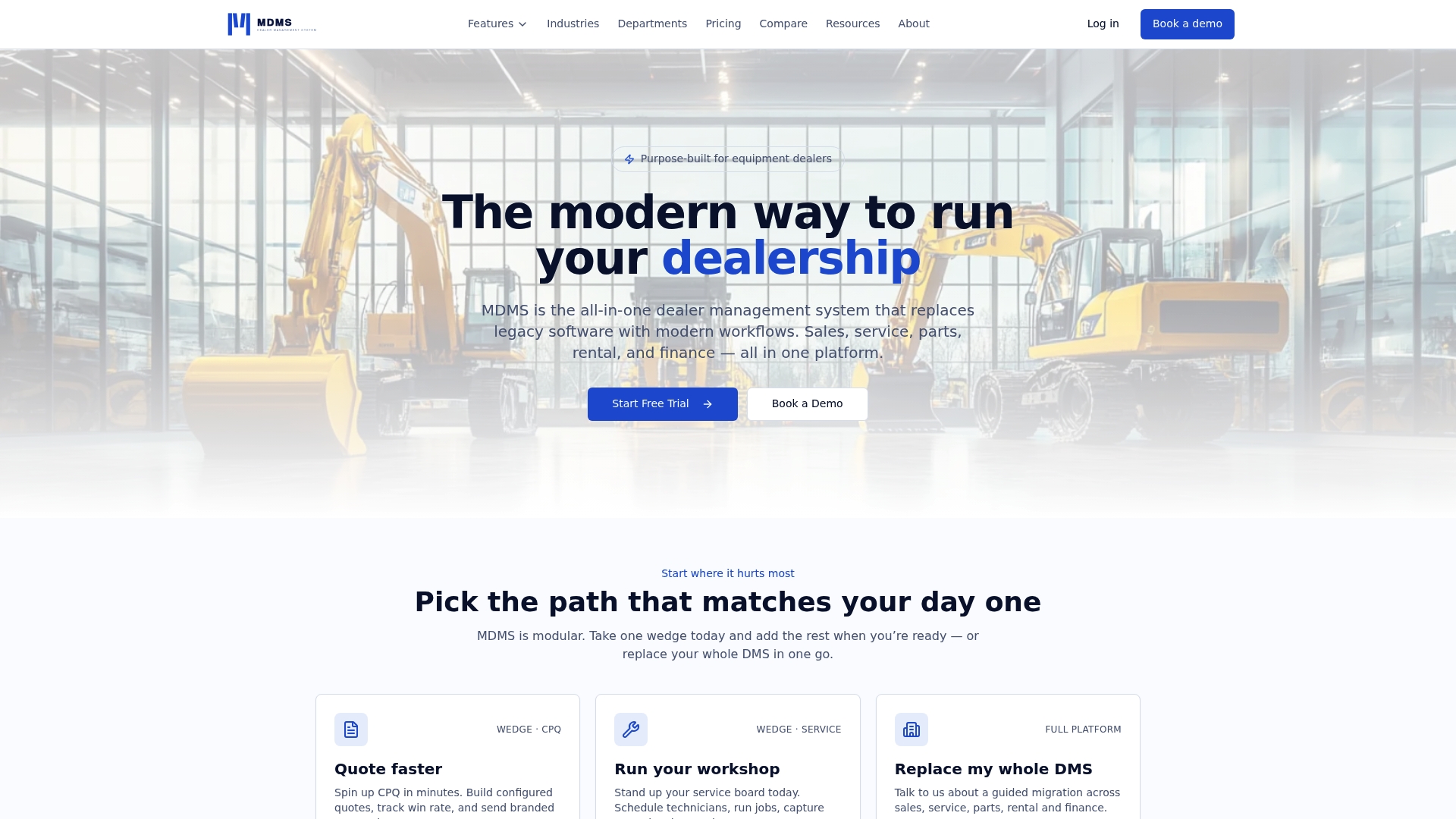
The platform covers the full lifecycle a dealer actually deals with: serial-anchored asset records, workshop and field service scheduling, parts and warehouse management, rental fleet tracking, and finance, all connected so a service history updates the same record a warranty alert or renewal opportunity draws from. You adopt it module by module, so a sales team can start with CRM and quoting while the workshop rolls out service scheduling separately. Setup takes under an hour, you keep full ownership of your data if you ever need to move it, and the Xero integration means your finance team isn’t re-entering what the workshop already recorded.
If you’re running a heavy equipment, forklift, or industrial dealership and your asset records live in three disconnected places, start with a demo of the heavy equipment dealer management platform and see what a single connected register looks like against what you’re using now.
Sources
- Asset lifecycle planning guide: Australian public sector
- Asset management best practice
- ISO 55001 page (TC251)
- Asset management 101 (Sentrient)
FAQ
What Are the Five Stages of the Asset Lifecycle?
Most frameworks describe four core stages, planning, acquisition, operation and maintenance, and disposal or renewal, though some models split acquisition into separate procurement and commissioning steps to make five.
How Do You Actually Track an Asset Through Its Lifecycle?
You assign each asset a unique ID at acquisition, then log condition scores, maintenance events, and location changes against that same ID in a central register or EAM platform so every record connects to one traceable history.
What Is the Best Software for Asset Lifecycle Tracking?
The right platform depends on your industry: equipment dealers benefit most from serial-anchored systems like Moderndms that connect sales, service, and finance, while facilities-focused teams may prioritize inspection templates and reporting instead.
What Is an Asset Tracking System, Exactly?
An asset tracking system is software, ranging from a simple asset register to a full EAM platform, that records an asset’s identity, location, condition, and history in one place so teams can plan maintenance and capital spending with real data.
How Does Condition Grading Decide When to Replace an Asset?
Condition grades on a 1 to 10 scale flag when action is needed. Grades of 3 to 4 usually trigger renewal planning within 6 to 12 months, while grades 5 to 7 call for weighing repair cost against replacement value before deciding.