Top 5 Dealer Management System Alternatives 2026
By MDMS Team · 14 July 2026
Top 5 Dealer Management System Alternatives 2026
Comparing dealer management systems for equipment and vehicle dealerships means sorting through tools with different features, modules, and industry focuses. Several platforms do not publish pricing, offer limited user reviews, or restrict integration details, which complicates direct evaluation for dealership teams. This comparison covers feature scope, deployment, and operational fit across five dealer management system alternatives so teams can match each option to their needs without guesswork.
Table of Contents
- Modern Dealer Management System (MDMS)
- Flyntlok
- Dealer Information Systems Corporation (DIS)
- Vizybility DMS
- Dealership Drive
- Comparison of alternatives
Modern Dealer Management System (MDMS)
At a Glance
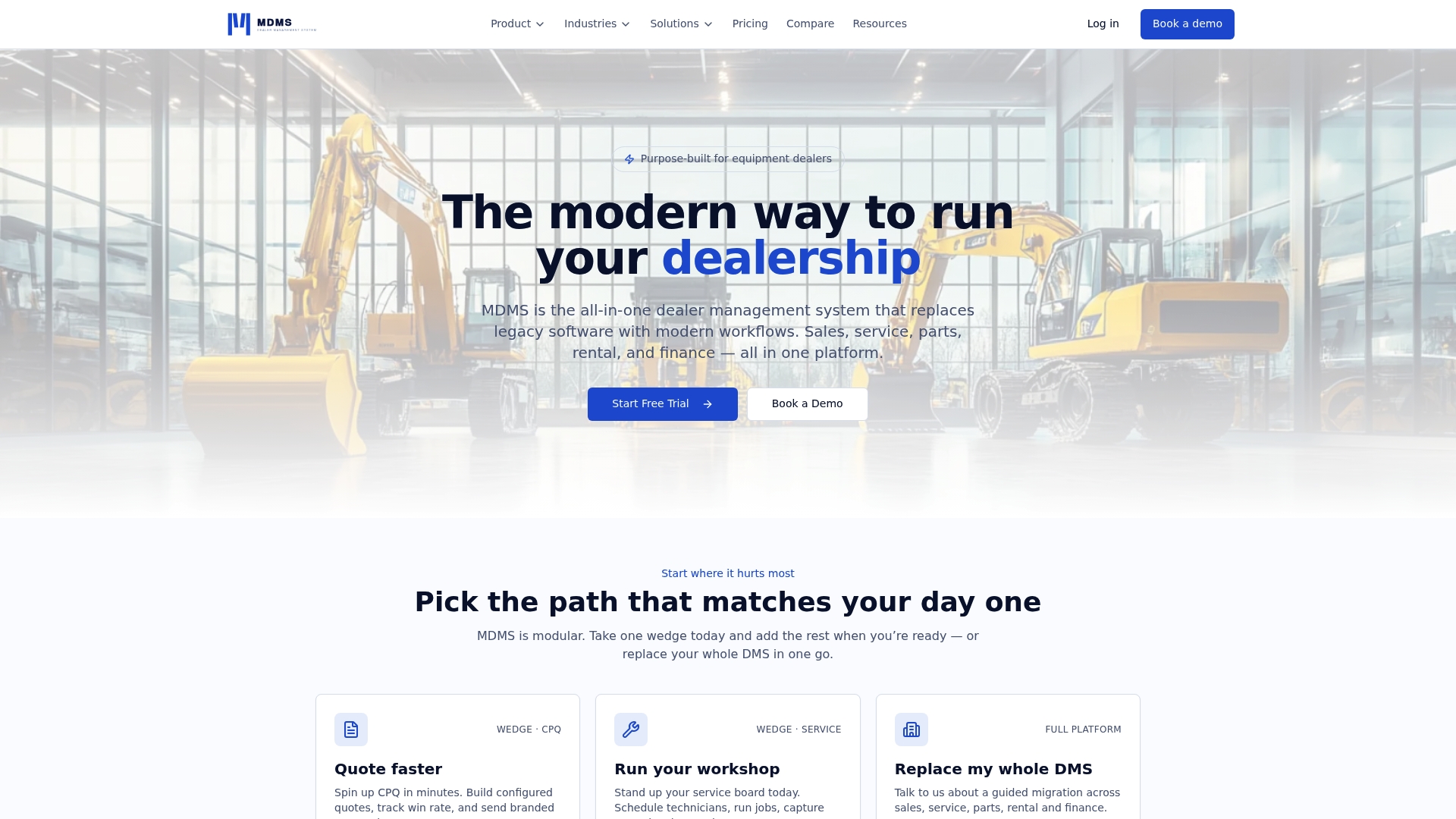
According to the company, setup can take under an hour. The vendor advertises up to 10 hours per week saved in administrative work for dealerships. MDMS targets Australian equipment dealers with modules for sales, service, parts, rental, and finance.
Core Features
MDMS groups CRM, sales, equipment management, parts, warehouse, workshop service, field service, rental, warranty, finance, and HR into a modular, all in one platform. The system includes a quote builder with live margin and digital signatures, build orders with task tracking and a live customer portal, and structured workflows for repeatable processes. Technicians get offline mobile support and GPS tracking, and the platform offers advanced reporting and KPI dashboards while hosting data in Australian data centers and supporting ABA payment file export.
Key Differentiator
Purpose built for Australian dealerships with native compliance features and a self service, quick deployment model. That focus on local accounting, payment formats, and data residency sets MDMS apart from generic DMS tools aimed at global markets.
Pros
MDMS eliminates lengthy rollout contracts and implementation fees by using a self service setup path, which reduces procurement friction and speeds deployment. The platform synchronizes with accounting via Xero and supports ABA export for batch EFT, which keeps bookkeeping and bank reconciliation local to Australian systems. Offline mobile capabilities let field technicians complete work orders without a network, and build orders plus the customer portal give buyers clear visibility on equipment configuration and service progress.
Cons
- Premium modules such as General Ledger and Operations incur additional costs, which may affect total spend for smaller dealerships.
Notable Integrations
- Xero accounting sync for automatic ledger updates and invoice flows.
Who It’s For
Your team if you run an Australian heavy equipment, construction, agricultural, or material handling dealership. MDMS suits dealers that need local compliance with GST, ABA file export, and Australian hosting. It also fits operations where remote technicians need offline mobile access and managers prefer a modular adoption path.
Unique Value Proposition
Native ABA payment file export and Australian data center hosting keep payment files and ledger data inside local systems. That combination reduces cross border accounting work and simplifies reconciliation for dealers that handle EFT payments and Xero ledgers in Australia.
Real World Use Case
A regional construction equipment dealer onboards quickly, configures sales and rental bundles, and runs workshop jobs and parts picks from the same system. Field technicians use the offline mobile app to complete jobs on remote sites and sync when they return. Customers track build orders and service status through the portal, reducing calls to the service desk.
Pricing
Monthly rolling plans start from A$59/month per core module, with optional premium modules and add on services. Bundled packages exist for common setups such as Full Dealership, Equipment Sales, and Rental, with preset module combinations and pricing.
Website: https://moderndms.com.au
Flyntlok
At a Glance
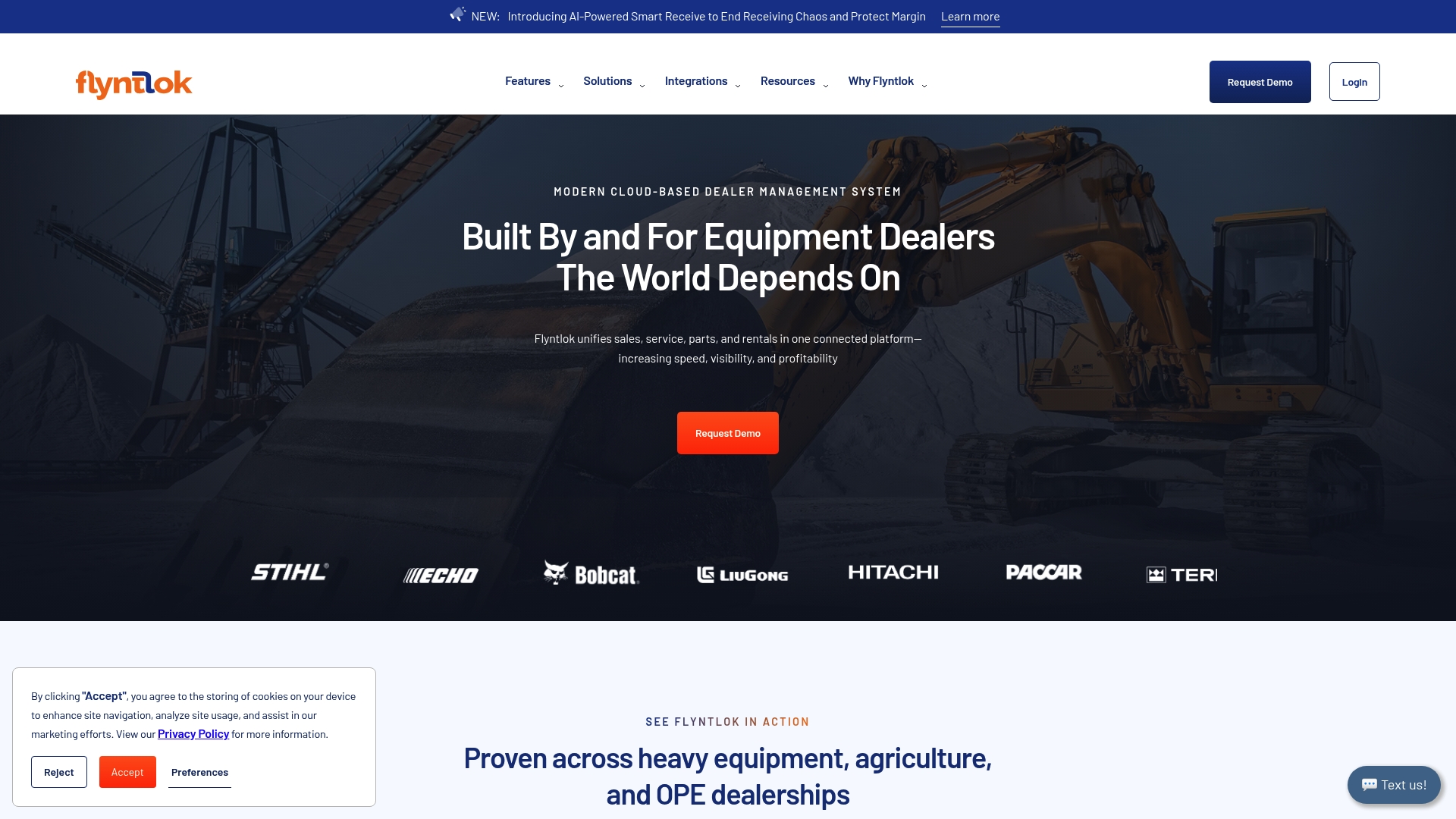
Built from scratch with modern cloud architecture specifically for equipment dealers. Flyntlok emphasizes AI smart campaigns and real time data insights to support sales, parts, service, rentals, and finance workflows. The vendor positions the product for dealers replacing legacy systems and seeking tighter OEM and finance system connections.
Core Features
Flyntlok combines parts management, service management, rental management, and accounting and finance tools into a single cloud based DMS. The platform exposes operational data for campaign targeting and reporting while supporting common dealership workflows across outdoor power, heavy machinery, agriculture, and commercial vehicle segments. Integrations with OEMs and finance platforms aim to keep inventory, serial numbers, and warranty records aligned across systems.
Key Differentiator
Flyntlok was built from the ground up as a cloud native system specifically for equipment dealerships. That architectural choice supports modular connectivity to third party tools rather than forcing a single monolithic stack. The result is a product that prioritizes integration and scalability for dealer operations.
Pros
The system’s core strength is that it was built for dealers rather than adapted from unrelated accounting or retail software. That focus shows up in workflows for deal sheets, work orders, rental fleet tracking, and parts pricing. Flyntlok also emphasizes OEM integrations and finance connectors to reduce duplicate data entry and preserve serial number fidelity across systems.
Cons
- No substantive third party reviews are available, which leaves independent evaluation thin.
- Several product pages and resource links report URL errors, which may slow research or self onboarding.
- Pricing is not publicly listed and appears to be custom, so budget planning requires direct vendor contact.
When It May Not Fit
Dealers that need on the shelf pricing or clear published tiers will find the lack of public pricing a barrier. Organizations that require extensive third party validation may prefer a vendor with more public reviews. If web resources remain unreliable, initial training and onboarding could take longer than expected.
Notable Integrations
- John Deere
- AGCO
- Bobcat
- Volvo
- Hitachi
- Stihl
- Paccar
- Sage Intacct
Who It’s For
Dealership owners and managers in equipment and vehicle sectors who want a modern, connected DMS built around dealer workflows. It fits teams replacing legacy systems and those that need OEM and finance system connectivity. The product suits dealerships that plan a phased migration to a cloud based platform.
Real World Use Case
A regional equipment dealer replaces a legacy on premise system with Flyntlok to centralize parts inventory, service history, and rental availability. The team runs targeted AI powered campaigns to return dormant customers and uses integrated accounting connections for month end reconciliation. The rollout improves visibility across locations and reduces duplicate data entry.
Pricing
Pricing is not publicly listed. The vendor offers custom quotes and typically provides pricing on request, so expect to discuss scope and modules with sales before receiving a proposal.
Website: https://flyntlok.com
Dealer Information Systems Corporation (DIS)
At a Glance
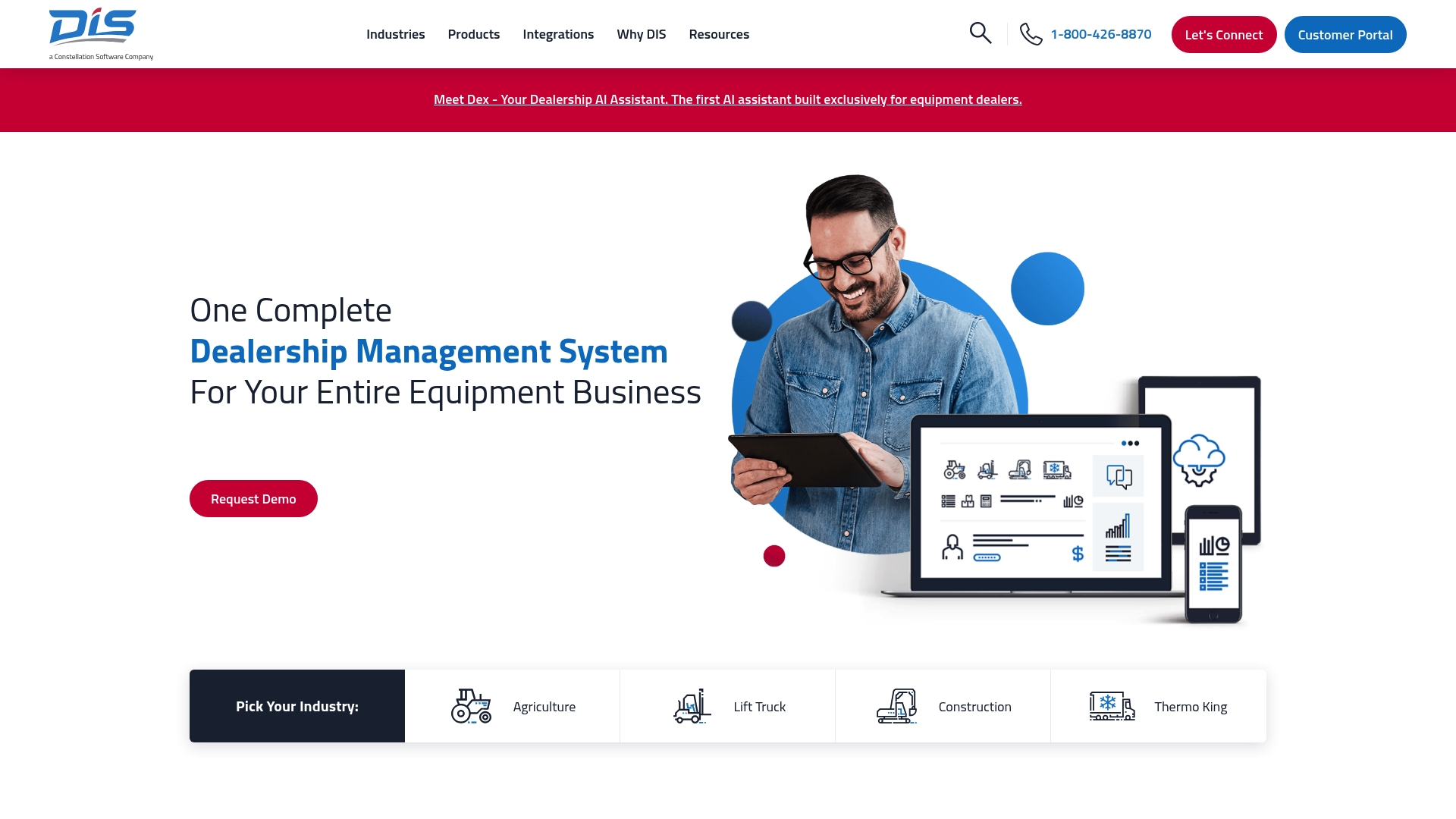
DIS reports it was developed with input from thousands of dealers. The product traces its roots to 1980 and targets equipment dealers across agriculture, construction, lift trucks, and Thermo King networks. Constellation Software provides corporate backing and an industry product network.
Core Features
DIS bundles inventory, sales, service, rental fleet, CRM, and accounting into a single cloud based platform that you can access from a browser or mobile app. The system includes real time inventory tracking and automatic parts ordering, plus scheduling and work order management for service departments. Server hosting is available through DIS Hosting Service to centralize backups and reduce onsite IT burden.
Key Differentiator
The primary distinguishing factor is the vendor focus on manufacturer connectivity and dealer metrics. DIS emphasizes integrations with equipment makers and tailored KPIs that reflect dealership workflows. That orientation, combined with Constellation Software backing, gives dealers a vendor network and product longevity not common in generic DMS offerings.
Pros
The product delivers a wide ranging feature set that covers sales, parts, service, rentals, and finance in one platform, which reduces data reentry across areas of your business. Cloud access and mobile apps let field staff and managers view inventory and work orders from any location. Industry specific manufacturer links and operational KPIs support dealership level reporting and multi location coordination.
Cons
- No recent third party user reviews exist. This makes independent assessment of day to day reliability difficult.
- Several core product pages on the vendor website return 404 errors. That may slow technical research during procurement.
- The broad feature set may introduce complexity for smaller dealerships. Implementation and training could require more time and resources.
When It May Not Fit
If your dealership is very small and wants a minimal toolset, DIS may feel larger than necessary. The missing independent reviews and broken site pages make vendor due diligence harder for buyers who rely on user feedback. Teams needing a lightweight, quick deploy system should compare simpler platforms first.
Notable Integrations
DIS lists direct manufacturer interfaces, including Kubota Interface Bundle, CNH Interface Bundle, and Activate OS ASIP Integration. These connections help automate OEM parts data, warranty exchanges, and equipment serial number flows.
Who It’s For
Mid to large equipment dealerships that operate across multiple locations and need OEM connectivity will get the most value. Dealers that require consolidated reporting across sales, service, parts, and rentals will benefit from the combined modules. If you have internal IT or can use hosted server support, the platform fits operational teams seeking centralized control.
Real World Use Case
A multi location construction equipment dealer uses DIS to coordinate inventory across yards, assign work orders to technicians, and bill rental contracts from the same system. Parts availability updates flow into service scheduling, reducing phone calls and manual stock checks. That single database simplifies month end reporting across locations.
Pricing
Not applicable. The vendor lists the product as informational only and does not publish pricing on the website. Prospective buyers must contact the vendor or a reseller for quotes and licensing models.
Website: https://dis-corp.com
Vizybility DMS
At a Glance
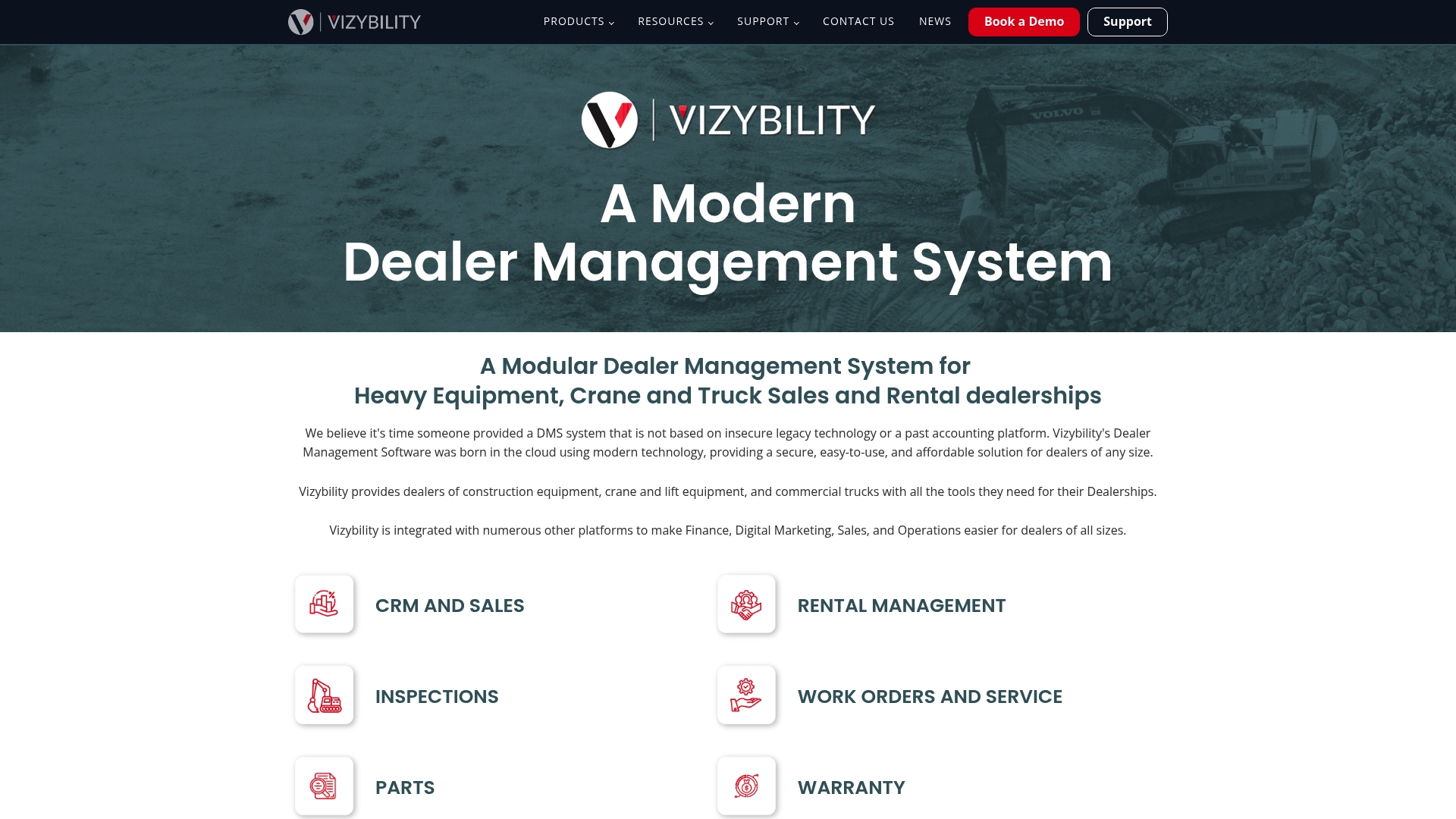
Built specifically for heavy equipment, crane, and truck dealerships, the product focuses on real time inventory and fleet management across sales and rental operations. The platform emphasizes cloud based access, integrated CRM, and tools for finance and parts control. That positioning targets dealers who run mixed sales and rental fleets and who need synchronized data across service, parts, and sales.
Core Features
The system uses cloud based deployment for continuous updates and remote access while offering real time inventory and fleet tracking with automated reorder signals. It combines an Integrated CRM with rental management, work orders, inspections, and parts inventory so your team sees the same record from lead to invoice. Financial tools include credit verification, financing calculations, and in house financing management that sit alongside reporting and analytics.
Key Differentiator
Vizybility DMS concentrates on the heavy equipment and truck niche with tools matched to rental fleets, crane operations, and vehicle resale networks. The product aims to reduce duplicate data entry by keeping sales, service, and parts workflows connected and by exposing real time data for pricing and availability decisions. This focus narrows the audience compared with broader dealer management systems.
Pros
The suite groups sales, rental, service, and parts into a single cloud based environment, which reduces the number of systems your team must open. Reporting and analytics receive strong emphasis, helping managers compare locations and run inventory reports with current availability. Mobile access and inspection tools let technicians update work orders on site and feed that data back to the point of sale and to finance modules.
Cons
- Public third party reviews are limited, making independent verification of user experience difficult.
- The vendor does not list detailed deployment costs or onboarding timeframes publicly.
- Specific third party integrations are described as possible but are not itemized in public material.
- No user reported common issues are available to balance vendor claims with field reports.
When It May Not Fit
If you require a DMS with widely published customer ratings and case studies, this option may feel unproven. Organizations that need a preset list of certified integrations might find the lack of public integration details a barrier. If your procurement process demands fixed published pricing and implementation timelines, the custom quote approach will require extra vendor conversations.
Who It’s For
Your team should consider Vizybility DMS if you operate heavy equipment, crane, or truck dealerships and you want a single platform for rentals, parts, and service. It fits dealers of any size who prefer cloud access and who are prepared to evaluate integrations directly with the vendor. Regional chains with multiple locations will benefit from unified inventory and cross location reporting.
Real World Use Case
A multi location heavy equipment dealer uses Vizybility DMS to unify inventory across yards, track rental contracts, and route work orders to technicians with mobile inspection checklists. Sales staff reference the same availability feed the service team sees, reducing double sells and manual reconciliations. Management runs fleet utilization and parts turnover reports to adjust stocking levels and rental pricing.
Pricing
Pricing is not specified publicly. Expect custom quotes and configuration estimates because the vendor positions the product for dealerships with varied fleet sizes and feature needs.
Website: https://vizybilitydms.com
Dealership Drive
At a Glance
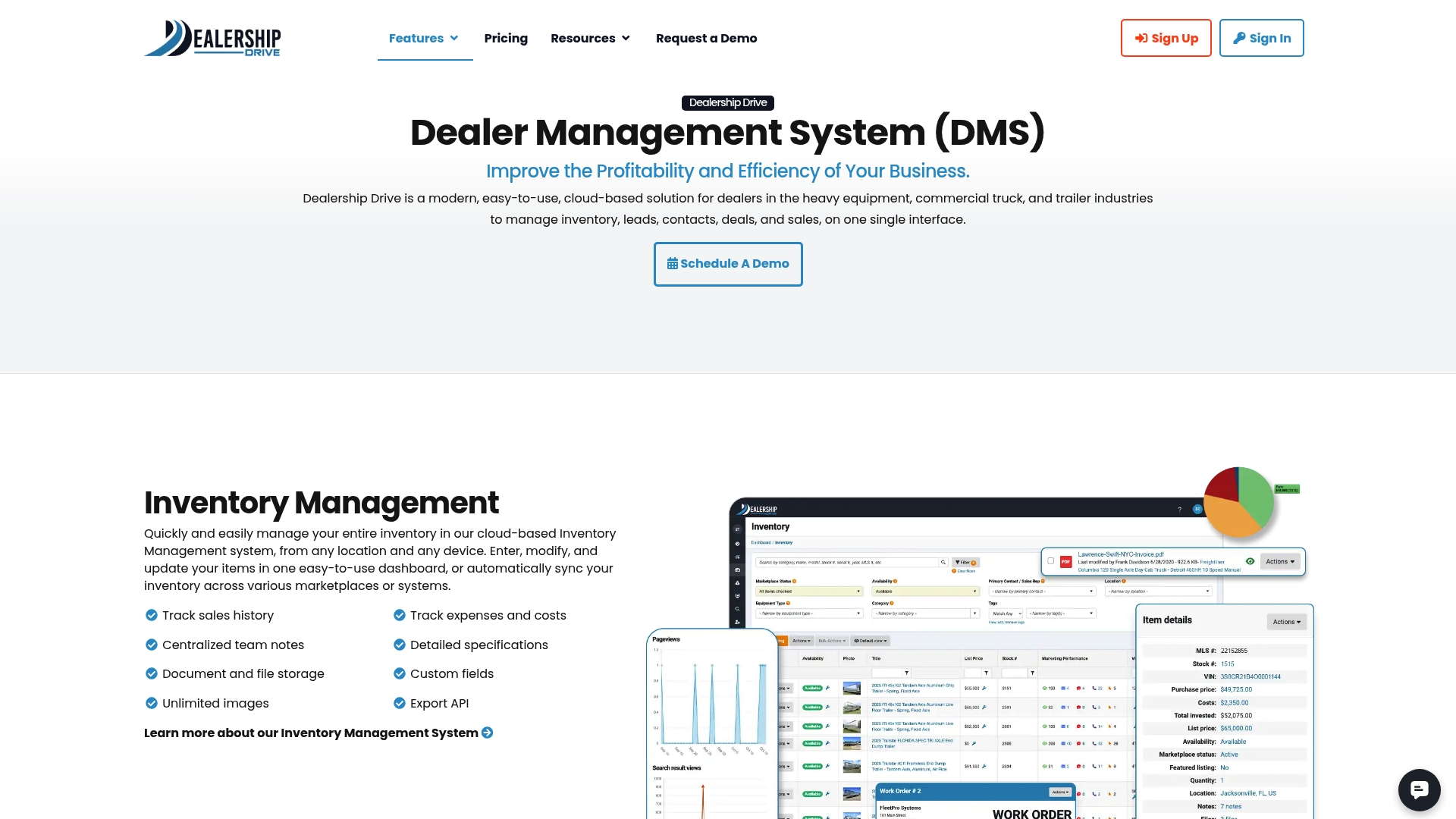
Tailored to heavy equipment, commercial truck, and trailer dealers, Dealership Drive centralizes inventory and customer records across sites. The platform combines a consolidated lead management hub with automated deal documentation and real time inventory sync. That combination aims to reduce duplicate data entry and speed closing cycles for multi location operations.
Core Features
Dealership Drive provides a consolidated lead management hub, a single contact and CRM system, and cloud based inventory control with multi location support. It automates deal paperwork and sales workflows while offering reporting and marketplace synchronization. The feature set focuses on moving a lead through to close with fewer manual steps.
Key Differentiator
The platform targets the heavy equipment, truck, and trailer vertical with features tuned to those workflows. Its strengths center on automation for deal documents and a real time inventory sync across locations and marketplaces. That vertical focus makes it more specialized for this sector than general dealer tools.
Pros
Dealership Drive groups inventory, leads, contacts, and deals inside a single interface, which reduces the need to switch between tools. The cloud based model makes data available on any device and supports dealers with multiple yards. The platform includes automation and integration points that cut repetitive tasks and let your team focus on sales and service.
Cons
- Limited third party review data exists to validate long term user satisfaction or uncover common issues.
- Public user ratings and independent testimonials are scarce, which makes risk assessment harder for large rollouts.
- Pricing details are not fully documented in the product summary, so buyers must request plan specifics from the vendor.
When It May Not Fit
If your dealership requires widely published user feedback before purchase, this product may feel risky because of limited third party reviews. Organizations with custom legacy systems may need an integration audit, since publicly listed integrations are limited. Large enterprises that need audited uptime or compliance evidence should confirm those requirements directly with the vendor.
Notable Integrations
Dealership Drive lists Zapier as a supported integration, which enables connections to CRMs, marketing tools, and spreadsheets via Zapier workflows. The vendor does not publish a broader integrations list in the summary, so confirm specific connectors during evaluation. Developers can ask about APIs or custom integration options if Zapier does not cover a required workflow.
Who It’s For
This product fits dealerships, manufacturers, and auctioneers that sell heavy equipment, trucks, and trailers and need unified inventory and sales tools. It suits small to mid sized operations that want multi location inventory control and automated sales documentation. Large dealers should validate integration and review availability before committing.
Real World Use Case
A heavy equipment dealer centralizes site inventories and tracks leads from website inquiries into the CRM. Sales staff use the platform to generate order documents automatically and update stock counts in real time across yards. Reporting then highlights which locations and channels close sales fastest for targeted marketing.
Pricing
The vendor states that pricing is available on the website and that plans are subscription based with monthly or annual billing. Plan names mentioned include Essential, Advanced, and Enterprise, with add ons available for extra capabilities. Contact the vendor for a quote tailored to your inventory size and required integrations.
Website: https://dealershipdrive.com
Comparison of alternatives
The dealer management systems analyzed within this comparison reveal unique advantages catering to distinct dealership requirements. Below, we highlight the critical differences aiding decision-making for operational efficiency.
Australian compliance versus global integration
Modern Dealer Management System (MDMS) specializes in addressing Australian-specific needs, including ABA payment export and data residency. This feature set contrasts sharply with Flyntlok, which focuses on providing extensive OEM integrations tailored to enhance connectivity with manufacturers like John Deere and Volvo. While MDMS secures localization for Australian compliance, Flyntlok offers scalability for dealerships needing multi-country manufacturer alignment.
Modular flexibility compared to feature depth
MDMS provides dealers the ability to adopt elements incrementally, ensuring budget-aligned scaling through its modular architecture. On the contrary, Dealer Information Systems Corporation (DIS) delivers a deeply interconnected platform aimed at larger operations, integrating sales, service, parts, and rentals under one cohesive system. As a result, DIS reduces operational fragmentation, whereas MDMS simplifies adoption processes for smaller operations.
Best fit
- Australian dealerships prioritizing compliance with local GST, data residency regulations, and ABA payment file handling.
- Operations requiring substantial OEM and manufacturer integration should consider the tailored partnerships provided by Flyntlok.
- Dealerships focused on managing large multi-location real-time equipment databases and transactions benefit from DIS’s expansive reporting systems.
- Small-to-medium teams looking for simplicity in transition and remote operational enablement will find MDMS’s self-service and modular deployment ideal.
Our pick
For Australian dealerships requiring a solution integrating domestic accounting and compliance standards, Modern Dealer Management System demonstrates advantages. In contrast, operations prioritizing extensive manufacturer integration or centralized control for multi-location setups might align better with Flyntlok or DIS, respectively.
Comparing leading dealer management systems reveals how these platforms serve equipment dealerships’ specific needs.
| Product | Core Feature | Best For | Pricing | Limitation |
|---|---|---|---|---|
| Moderndms | Modular platform | Australian equipment dealers | A$59/month per module | Premium modules add extra costs |
| Flyntlok | Cloud-native DMS | Dealers focusing on integration | Price not published | Third-party reviews are limited |
| DIS | Inventory management | Multi-location dealerships | Price not published | Complex for smaller dealerships |
| Vizybility DMS | Fleet management | Heavy equipment dealerships | Price not published | Limited integration details available |
| Dealership Drive | Real-time inventory sync | Heavy equipment/truck dealerships | Subscription-based | Limited public reviews and testimonials |
Choosing the Right Dealer Management System for Your Equipment Dealership
Selecting a dealer management system is a challenge when you weigh factors like local compliance, modular flexibility, and integration with key accounting platforms. Teams running Australian heavy equipment dealerships need tools that save time on administrative tasks while offering clear visibility across sales, service, parts, and rentals.
Moderndms provides a purpose-built system that meets these needs with quick setup under an hour and native support for Xero accounting. Its modular design lets your team adopt exactly the features required now and expand later. Using Moderndms reduces data reentry and frees technicians with offline mobile access, helping you manage operations from any location efficiently.
See how your team can save up to 10 hours per week by visiting Moderndms. Review the platform capabilities and schedule a demo to import your sales and service data with ease.
FAQ
What makes Moderndms suitable for Australian dealerships?
Moderndms is designed specifically for Australian dealerships, providing native compliance features and a quick deployment model. This focus includes local accounting and data residency, ensuring that the product fits the unique operational needs of Australian equipment dealers. Your team can confidently use a system that aligns with local requirements.
How does Flyntlok compare to Moderndms in terms of integrations?
Flyntlok emphasizes strong integrations with OEMs and finance platforms, which helps reduce duplicate data entry across systems. Moderndms also supports integration, specifically with Xero for automatic ledger updates and invoice flows, making it ideal for teams prioritizing local compliance and smoother accounting processes.
Which platform offers offline capabilities for field technicians?
Moderndms provides offline mobile support for field technicians, allowing them to complete work orders without needing a network connection. This feature is particularly beneficial in remote areas, enabling your team to maintain productivity even when connectivity is limited.
Does Moderndms offer a self-service setup option?
Yes, Moderndms uses a self-service setup path that eliminates lengthy rollout contracts and implementation fees. This approach speeds up deployment for your dealership, making it easier to start using the system without extensive upfront commitments.
What are the pricing plans for Moderndms?
Moderndms has monthly rolling plans starting from A$59/month per core module, with optional premium modules and add-on services. This pricing model allows dealerships to choose the modules that best fit their specific needs and budget.