Inventory Tracking for Australian Businesses: 2026 Guide
By MDMS Team · 19 July 2026

Inventory Tracking for Australian Businesses: 2026 Guide
TL;DR:
- Inventory tracking involves continuously monitoring stock quantities, locations, and movements across the supply chain. It ensures real-time accuracy, reduces errors, and supports tax compliance for Australian businesses. Modern software systems, like Moderndms, automate updates, improve efficiency, and enhance customer satisfaction.
What is inventory tracking, and why does it matter for Australian businesses?
Inventory tracking is the systematic process of monitoring stock quantity, location, and movement at every stage of the supply chain, from receiving and storage through to dispatch or service installation. It differs from broader inventory management, which covers forecasting, purchasing, and long-term supply strategy. Tracking is the operational layer underneath all of that: it tells you what you actually have, right now.
For Australian businesses, getting this right carries real compliance weight. The Australian Taxation Office reported a net small business income tax gap of A$27.2 billion for 2022–23, representing 17.4% of theoretical tax owed, with inaccurate recordkeeping identified as a key driver. Your Business Activity Statement accuracy depends directly on the integrity of your stock records.
Poor tracking also creates phantom stock: items that appear in your system but are not physically present, usually from unrecorded breakages, theft, or data entry errors. A customer orders a part you do not actually have, and the damage to your service reputation follows quickly.
Key functions inventory tracking covers:
- Stock quantity and location across all storage areas and service vehicles
- Movement records for every transaction: receiving, transfers, sales, and returns
- Reorder points and expiration dates where applicable
- Serial number and SKU-level visibility for equipment and parts
Periodic vs. perpetual: which tracking system fits your operation?
Two approaches define how businesses capture stock data. Understanding both helps you choose the right fit before committing to a system.

Periodic inventory systems rely on manual counts at scheduled intervals, monthly or quarterly, with records updated in spreadsheets or paper logs. They work for very small operations with limited SKUs, but accuracy degrades quickly as transaction volume grows.
Perpetual inventory systems update records automatically with every transaction, giving you a live picture of stock at any moment. Perpetual tracking delivers 99.9% accuracy and can reduce stockouts by 30% within six months. For any business managing parts, equipment, or rental assets across multiple locations, perpetual is the practical standard.
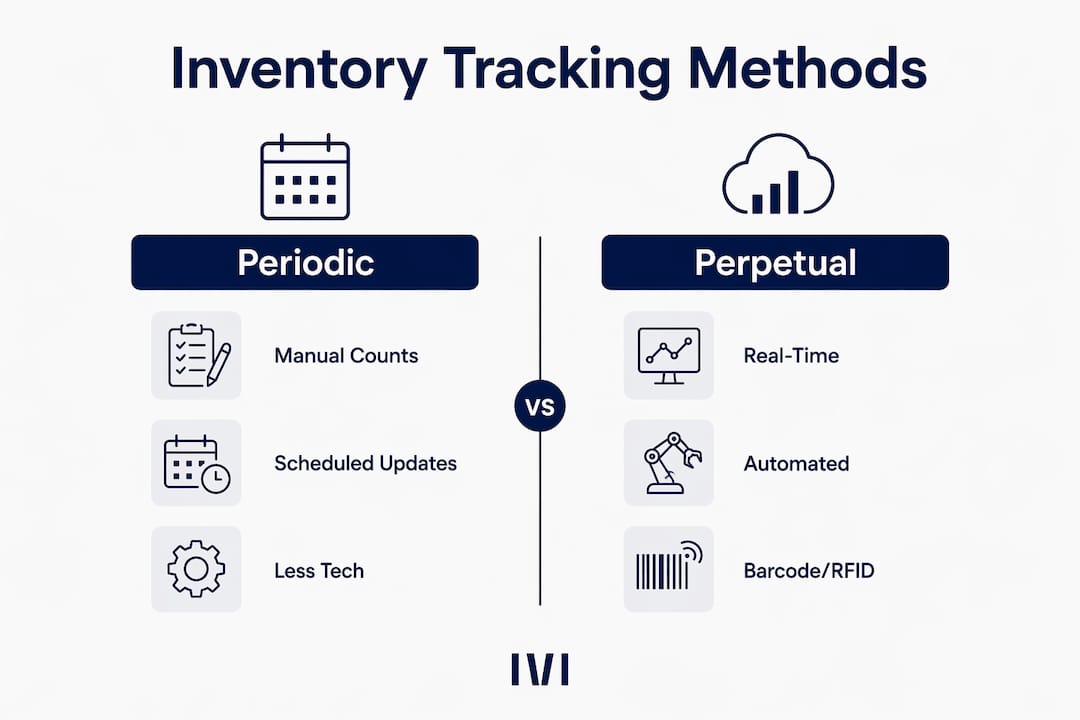
Common technologies that power perpetual systems include barcode scanning, RFID tags, and point-of-sale integrations that write stock movements to a central database the moment a transaction occurs.
Why manual tracking breaks down as your business grows
Manual processes create compounding errors. A missed return, an unrecorded transfer to a service van, a spreadsheet formula that nobody updated: each gap widens the distance between your records and physical reality. Dealers frequently fail to track mobile inventory on service vehicles, which causes shrinkage and inaccurate job costing that erodes margins without any single obvious cause.
Software-based systems eliminate most of that exposure. They capture every movement automatically, flag discrepancies in real time, and give your finance team numbers they can trust for BAS lodgement and year-end stock valuation.
How inventory tracking connects your supply chain
Accurate stock data sits at the intersection of purchasing, warehousing, and sales. When your parts and warehouse records update in real time, your procurement team orders at the right moment, your service team picks the right parts, and your finance team posts correct cost-of-goods figures without manual reconciliation. According to business.gov.au, keeping up-to-date inventory records helps businesses meet tax obligations and makes end-of-year reporting easier. A real-time inventory tracking system pulls data from scanners, sales channels, and accounting tools into one source of truth, so finance and operations work from the same numbers.
Inventory tracking software used in Australia
Several platforms are widely used by Australian businesses to manage stock across locations and channels. The right choice depends on your industry, transaction volume, and integration requirements.
- Cloud-based inventory platforms suited to retail and wholesale businesses typically integrate with Xero or MYOB for automatic COGS posting and BAS preparation.
- Enterprise resource planning (ERP) systems cover procurement, warehousing, and financials in one environment, suited to distributors managing complex multi-location stock.
- Purpose-built dealer management systems like Moderndms handle equipment serial numbers, parts warehousing, rental fleet tracking, and service job costing within a single platform built for Australian GST compliance.
For equipment dealerships specifically, generic retail inventory tools often fall short because they cannot track serialized assets, manage build orders, or link parts consumption to work orders.
Best practices for implementing inventory tracking
Getting the setup right from day one prevents the reconciliation headaches that plague businesses that bolt on a system after the fact.
- Audit your current stock before going live. A clean opening count is the foundation everything else builds on.
- Choose perpetual over periodic if your transaction volume exceeds what one person can manually reconcile each week.
- Assign clear ownership of stock movements. Every receiving, transfer, and dispatch needs a named user and a timestamp.
- Run cycle counts regularly rather than waiting for a full annual stocktake. Counting a rotating subset of SKUs each week catches discrepancies before they compound.
- Integrate with your accounting system so stock movements post to your general ledger automatically, keeping your BAS figures accurate without manual data entry.
Pro Tip: Set reorder points at the SKU level before you go live. Waiting until you run out of a critical part to discover the threshold was never configured is a costly way to learn the lesson.
You can also track inventory across fulfillment centers using the same perpetual principles, applying location-specific bin management to keep multi-site stock counts accurate.
How accurate tracking reduces costs and lifts customer satisfaction
When your stock records reflect physical reality, the operational benefits compound quickly. Your team stops spending time on reconciliation and starts making decisions with reliable data. Purchasing becomes proactive rather than reactive, because reorder alerts fire before a stockout occurs rather than after a customer calls to chase a delayed order.
Real-time equipment management visibility is directly linked to profitability and operational efficiency, particularly for dealers managing parts, rentals, and service revenue centers simultaneously. On the customer side, accurate stock data means fewer backorders, faster fulfillment, and service technicians who arrive with the right parts. That reliability builds the kind of trust that keeps customers returning.
Moderndms brings inventory tracking built for Australian equipment dealers
Equipment dealerships run more complex inventory workflows than most businesses. You are tracking serialized machines, parts bins, rental fleet assets, and service van stock simultaneously, often across multiple branches.
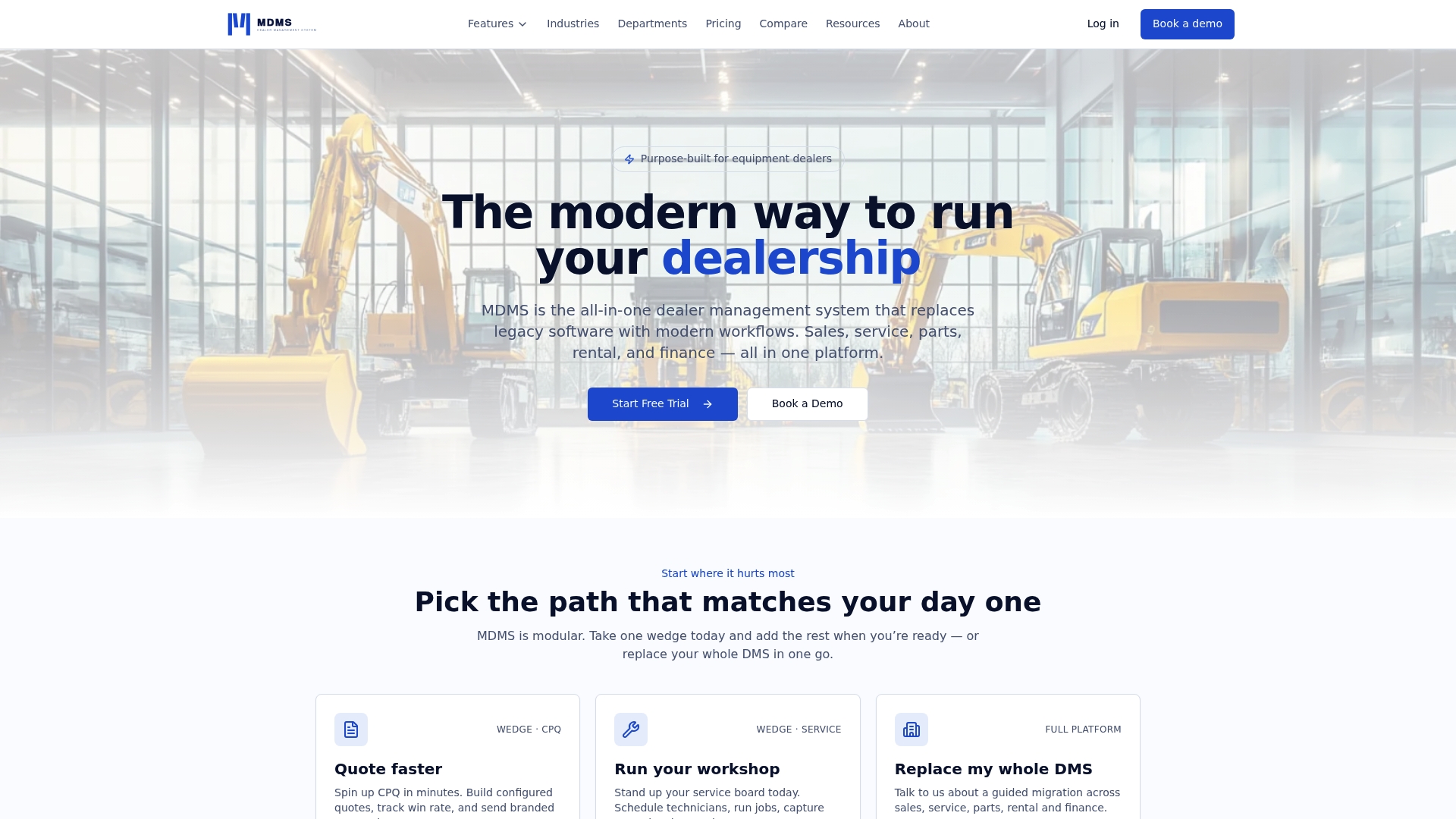
Moderndms is a cloud-native dealer management system built specifically for this environment. Its parts and warehouse management module handles bin locations, stocktake, cycle counts, and purchase orders in one place. The equipment and serial inventory module tracks every unit by serial number through its full lifecycle, from build order through to sale or rental. Everything integrates with Xero for automatic GST compliance and BAS-ready financials, with no manual reconciliation between systems. Setup takes under an hour, contracts roll monthly with no lock-in, and your data stays yours. For equipment dealers ready to replace spreadsheets and disconnected tools with a single platform, Moderndms is the practical next step.
Key Takeaways
Accurate inventory tracking is the foundation of tax compliance, operational efficiency, and customer reliability for Australian businesses in 2026.
| Point | Details |
|---|---|
| Tax compliance risk | The ATO reported an A$27.2 billion small business tax gap for 2022–23, partly driven by inaccurate recordkeeping. |
| Perpetual beats periodic | Perpetual systems deliver 99.9% accuracy and can cut stockouts by 30% within six months. |
| Mobile stock is a blind spot | Untracked inventory on service vehicles causes shrinkage and inaccurate job costing. |
| Integration is the multiplier | Connecting stock records to accounting tools eliminates manual reconciliation and keeps BAS figures accurate. |
| Moderndms for dealers | Moderndms provides serial inventory, parts warehousing, and Xero integration in one platform built for Australian equipment dealerships. |
FAQ
What is inventory tracking in simple terms?
Inventory tracking is the ongoing process of recording stock quantities, locations, and movements so your system data always matches what is physically on the shelf.
How does inventory tracking differ from inventory management?
Tracking monitors real-time stock status and movement. Inventory management uses that data to plan purchasing, set reorder points, and coordinate supply chain strategy.
Why does inventory tracking matter for Australian tax compliance?
The ATO requires businesses to value trading stock accurately at 30 June each year. Errors in stock records flow directly into incorrect COGS figures and unreliable BAS lodgements.
What technology do perpetual inventory systems use?
Perpetual systems typically use barcode scanning, RFID, or point-of-sale integrations to update stock records automatically with every transaction.
Can Moderndms handle inventory tracking for equipment dealerships?
Yes. Moderndms tracks serialized equipment, parts bins, rental fleet assets, and service van stock within a single platform, with built-in Australian GST compliance and Xero integration.