Save Up to 10 Hours With Your DMS: Asset Tracking for Equipment Dealers
By MDMS Team · 31 August 2026
Save Up to 10 Hours With Your DMS: Asset Tracking for Equipment Dealers
Asset tracking for dealerships means running one authoritative record for every unit, part and rental asset inside your dealer management system, not bolting on separate spreadsheets or GPS boxes. The right move is an integrated DMS module that stores that single record and automatically pushes status changes across sales, rental, service and parts. MDMS was built around exactly this model for equipment dealers.
TL;DR:
- Proper asset tracking must include a single, comprehensive record for each unit, with real-time status updates across sales, rental, and service modules.
- An integrated system should automatically synchronize status changes, preventing ghost assets and ensuring all departments see consistent asset location and condition data.
- Vendors should demonstrate real-time transfer, overdue alert, and parts reservation workflows during demos, and avoid solutions that lock data in proprietary formats or charge per yard.
- Rollouts are safest when phased, starting with a single yard or asset class, cleaning up data beforehand, and training staff by their roles to ensure a smooth transition.
- Implementing an effective DMS asset module can save up to 10 hours weekly in administrative work, improve inventory accuracy, and increase rental utilization once properly tracked and managed.
Table of Contents
- What an Effective DMS Asset-Tracking Module Must Do
- How Status Changes Propagate Without Creating Ghost Assets
- Evaluating Asset-Tracking Modules: A Vendor Checklist
- Rolling Out Asset Tracking Without Disrupting Operations
- What to Measure After Turning On Asset Tracking
- Publisher Perspective: Operate Through Your DMS, Not Around It
- How MDMS Handles Asset Tracking End to End
- Sources
- FAQ
What an Effective DMS Asset-Tracking Module Must Do
Most dealers already have the data. The problem is that it lives in three disconnected places: a spreadsheet the sales manager updates, a service system the shop floor uses, and a rental calendar someone maintains by hand. An AEM industry analysis makes the case plainly: a modern DMS has to work as the operational backbone, surfacing information in real time rather than just logging what already happened.
When you sit through a vendor demo, verify these capabilities specifically:
- A single unit record that carries serial number, warranty status, finance flags and full lifecycle history from acquisition to disposal.
- Commercial state and location fields attached directly to the asset. Is it for sale, on rent, in the shop, or in transit between yards?
- Parts and warehouse linkage, including bills of materials, reservations, picking lists and reconciliation against physical counts.
- Rental contract lifecycle tracking, covering active contracts, return dates and utilization reporting by asset class.
- Work order integration so a service event on a unit automatically updates that unit’s availability everywhere else.
- Open APIs and accounting integration, such as a live connection to Xero, plus a straightforward way to export your own data.
That last point matters more than most dealers realize during a purchase decision. A DMS that locks your serial histories and financial records inside a proprietary format creates a migration headache years down the road. Insist on data ownership from day one.
How Status Changes Propagate Without Creating Ghost Assets
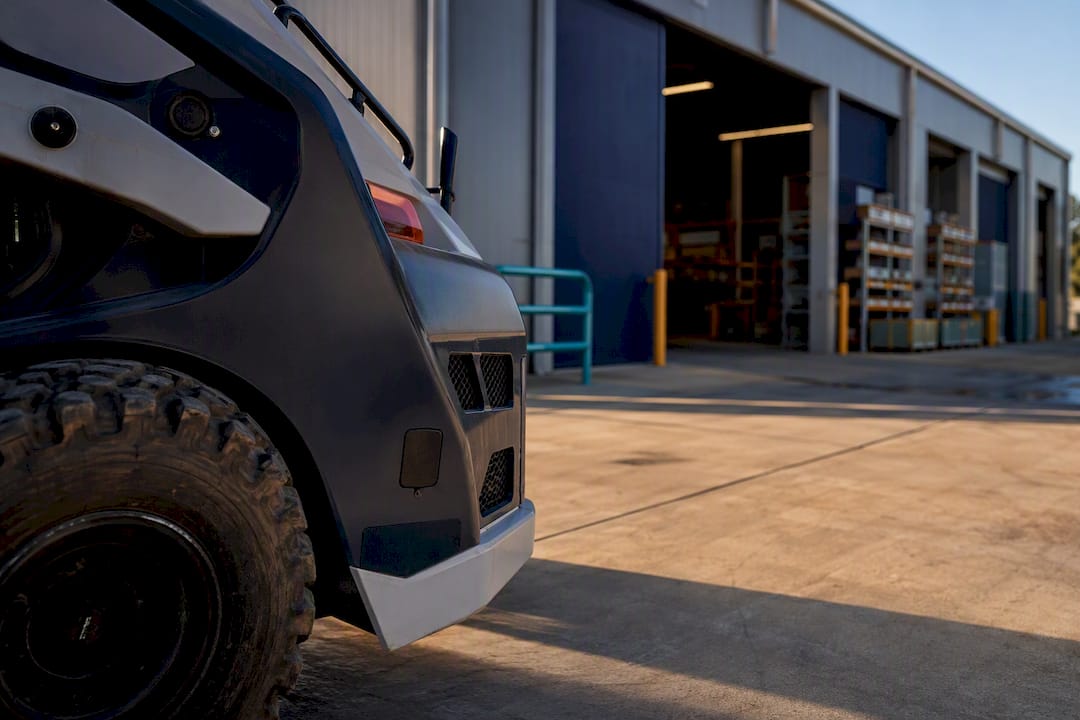
Picture a skid steer moving through its normal life at a mid-size dealership. It arrives as new inventory, gets sold, comes back three months later as a trade-in, spends two weeks on the rental fleet, then goes into the shop for a hydraulic repair before returning to the yard. Each of those transitions touches a different department. If those departments run on separate systems, the unit ends up listed as “available” in one place and “in service” in another. That mismatch is what the industry calls a ghost asset. It is a machine your records say exists in one state while it’s actually somewhere else entirely.
A properly built asset-tracking module eliminates that conflict by design. The record updates once, at the source, and every connected module reads from that same field.
Here’s the sequence that should happen automatically:
- A rental return gets scanned in at the yard, and the system flags the unit as “returned, pending inspection.”
- That flag triggers a service module notification, and a work order gets generated without anyone typing it in manually.
- Once the technician closes the work order, the asset flips back to “available for sale or rent” without a second data entry step.
- Sales and rental staff see the updated status the moment it changes, not after someone remembers to update a spreadsheet.
Serialized tracking underpins all of it. Every unit needs a scannable serial number or barcode, and every transfer between yards, departments or ownership states needs a logged scan event rather than a verbal handoff. This is also where telemetry earns its place. Combining IoT sensor data with rental software supports predictive maintenance and usage-based billing, but only when that software actually converts the readings into workflow triggers instead of just displaying a dashboard nobody checks.
Pro Tip: If your team is still emailing a spreadsheet to confirm a unit’s location before quoting a customer, that’s the clearest sign your current system isn’t propagating status automatically.
Evaluating Asset-Tracking Modules: A Vendor Checklist
Run every vendor demo against the same list, because sales presentations tend to highlight whichever feature looks best on a screen rather than what actually holds up during a busy Monday.
Confirm the platform delivers:
- A unified asset record visible from sales, rental and service screens simultaneously.
- True serialized tracking down to the individual unit, not just category-level counts.
- Full rental lifecycle handling, including overdue-return alerts and utilization reporting.
- Parts reservation tied directly to work orders and BOMs.
- Support for multiple yards or locations without separate logins or duplicate records.
- An open API and clear data-export process you control.
During the demo itself, ask the vendor to show you three things live: a unit transferring from rental back to available inventory, how the system flags an overdue return, and a parts reservation flowing straight into an active work order. If they can’t demonstrate these in real time, treat that as a gap, not a formality.
On the commercial side, ask how pricing scales. A pricing model that charges per site rather than per asset actively punishes growth, since adding a second or third yard shouldn’t multiply your software cost.
Pro Tip: Watch for vendors who dodge the data-ownership question. If they can’t clearly explain how you’d export your full asset history on your own terms, walk away from the deal.
Rolling Out Asset Tracking Without Disrupting Operations
Trying to flip every department onto a new asset-tracking module in one weekend is how rollouts fail. The lower-risk path is modular: adopt one capability at a time, prove it works, then expand.
- Pilot one yard or one asset class first. Pick a manageable slice, such as your rental fleet at a single location, before touching the whole network.
- Clean up your data before go-live. Serialize every unit, remove duplicate records, and reconcile conflicting histories between departments.
- Train by role, not all at once. Technicians need to know how work orders auto-populate; parts staff need the reservation workflow; yard staff need the scan process for transfers.
- Connect your accounting platform early. Configure the Xero integration and any other API connections during the pilot phase, not after full rollout.
- Expand only after the pilot shows measurable improvement. Add the next module or the next yard once the first phase is stable.
The most common pitfalls are skipping the pilot entirely, rushing data cleanup, undertraining yard staff who end up reverting to paper, and signing a pricing structure that penalizes the exact growth you’re planning for.
What to Measure After Turning On Asset Tracking
The KPIs that matter most: hours of admin time recovered per week, inventory reconciliation accuracy, rental fleet utilization rate, time-to-bill after a job closes, and the shrinkage rate tied to ghost or misplaced assets.
Dealers who move routine asset lookups and status updates out of spreadsheets and into a connected DMS have reported saving up to 10 hours per week in administrative work, according to MDMS customer feedback.
Build your reporting around a short monthly review:
- Compare reconciliation counts (physical vs. recorded) month over month.
- Track rental utilization by asset class to spot underused units.
- Review time-to-bill trends after service jobs close.
Those three numbers, tracked consistently, give owners a clear before-and-after picture without needing a full financial audit.
Publisher Perspective: Operate Through Your DMS, Not Around It
The dealers who get the most value treat the DMS as the system of record, not a reporting tool they check after the fact. That distinction changes daily behavior: staff enter data once, at the source, instead of maintaining parallel spreadsheets “just in case.” Adopt modules gradually, keep your data exportable, and resist any platform that asks you to trust it blindly.
— ModernDMS
How MDMS Handles Asset Tracking End to End
MDMS was built specifically for equipment dealers who need one system, not five workarounds stitched together. It gives you a single asset record spanning sales, rental and service, modular features you turn on as you’re ready, full ownership of your own data, and a live Xero integration for accounting.
Setup typically runs under an hour, and dealers using the platform have reported saving up to 10 hours a week in administrative work. Whether you run a single yard or manage rental fleets across multiple locations, the modular structure means you can start with the module you need most, whether that’s parts and warehouse management or full asset lifecycle tracking, and expand from there. If you’re evaluating options for your equipment dealership, book a demo and see how the asset record works before you commit to anything.
Sources
- Why Dealers Getting More from Their Heavy Equipment DMS Matters More Than Ever - AEM
- Dealer-Network Asset Visibility | Hapn
- Benefits of Combining IoT with Heavy Equipment Rental Management Software | Praxedo
FAQ
Is asset tracking for dealerships the same as GPS fleet tracking?
No. Asset tracking for dealerships refers to a DMS module that manages unit records, status and history across sales, rental and service, while GPS fleet tracking is separate hardware for physical vehicle location.
What’s the biggest cause of “ghost assets” at a dealership?
Disconnected systems where sales, rental and service each maintain their own status for the same unit, so no single record reflects reality. An integrated DMS record eliminates that conflict.
How long does it take to roll out an asset-tracking module?
A modular pilot on one yard or asset class can go live quickly. MDMS setups typically take a short time to configure before staff can begin using the system.
Should pricing be per asset or per site?
Per-asset or enterprise pricing is preferable, since per-site pricing penalizes dealers as they add yards, discouraging the exact growth most dealerships plan for.
What administrative time savings can dealers expect?
MDMS customer testimonials report savings of up to 10 hours per week in administrative tasks after adopting an integrated asset-tracking workflow.