Inventory Tracking System for Equipment Dealers: 2026 Guide
By MDMS Team · 28 July 2026
Inventory Tracking System for Equipment Dealers: 2026 Guide
An inventory tracking system is a centralized, real-time platform that manages parts stock, serialized equipment, and unit history while connecting your service, sales, and accounting workflows — so your dealership stops losing margin to stockouts and emergency buys. For Australian equipment dealers, the best implementations integrate directly with Xero or MYOB for GST compliance and link to a full dealer management system (DMS) like Moderndms. The practical outcome: your team works from a single source of truth across the warehouse, service bays, and field vans.
- Real-time visibility across all stock locations (warehouse, truck, job site)
- Serialized asset records that link parts, service history, and sales
- Automated reorder rules that prevent stockouts before they happen
- Accounting integration for GST-compliant invoicing and reconciliation
Table of Contents
- What does an inventory tracking system do for equipment dealers?
- Why inventory control directly impacts your dealership’s profitability
- What Australian dealers specifically need from their system
- How inventory tracking connects your workshop, field service, and sales workflows
- How to choose the right inventory tracking system for your dealership
- What to expect during implementation and rollout
- Common pitfalls dealers run into — and how to avoid them
- Why a purpose-built DMS is the right choice for equipment dealers
- Key Takeaways
- The real gap most dealers are still living with
- Moderndms: purpose-built inventory tracking for Australian equipment dealers
- Useful sources and further reading
- FAQ
What does an inventory tracking system do for equipment dealers?
An inventory tracking system for equipment dealerships goes well beyond counting stock on a shelf. It manages the full lifecycle of assets and parts, from goods receipt through to field consumption, and records every movement with an audit trail. That distinction matters for equipment dealers because you are simultaneously managing high-value serialized units (excavators, forklifts, generators) and high-volume consumable parts — two very different data models that a generic warehouse app will conflate.
The core features your system must cover:
- Real-time location visibility across warehouses, service vans, and remote job sites
- Serialized asset tracking with unique serial numbers, build records, and full unit history
- Parts and warehouse management including bills of materials (BOMs), multi-location stock, and bin-level tracking
- Reorder automation with min/max thresholds, vendor lead-time rules, and predictive replenishment based on historical usage
- Unit history and lifecycle records that link parts consumed to specific work orders, sales deals, and warranty claims
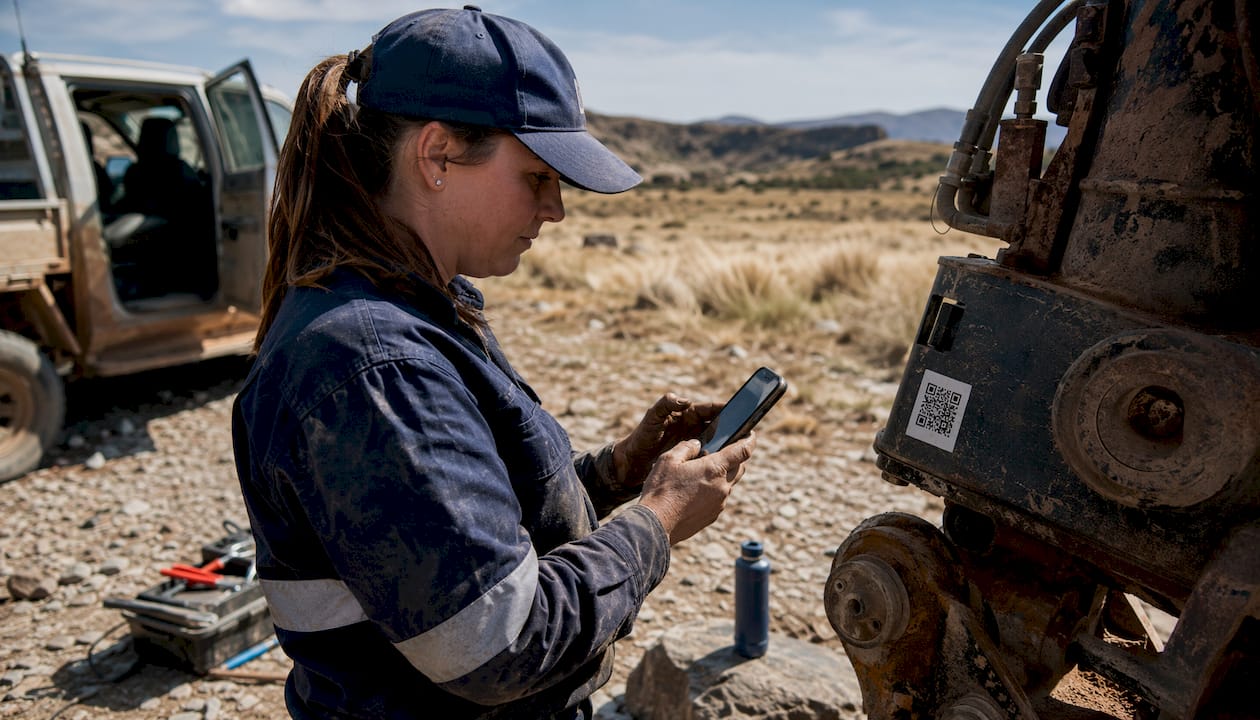
- Mobile scanning (barcode/RFID) with offline capability for field technicians who work outside network coverage
Pro Tip: Set up your serialized assets and consumable parts as distinct data models from day one. Mixing them in a single flat list creates reporting confusion and makes warranty recovery far harder to manage.
Why inventory control directly impacts your dealership’s profitability
Poor inventory control costs equipment dealers in ways that rarely show up on a single line of the P&L. Emergency parts freight, technician downtime while waiting on stock, and duplicate procurement across branches all erode margin quietly. Integrated inventory management solutions address each of these directly by connecting stock data to service scheduling and sales pipelines.
A real-world example of what last-yard tracking reveals: one underground mining parts operation recorded 434 zero-point events across 12 months and identified 33 parts that sat at zero stock for seven or more consecutive days. That data enabled precise adjustments to warehouse minimums — adjustments that a static reorder spreadsheet would never surface.
| Operational problem | Impact without tracking | Impact with integrated tracking |
|---|---|---|
| Emergency parts procurement | High freight cost, job delays | Prevented by automated reorder rules |
| Technician idle time | Waiting on parts, missed SLAs | Reduced by real-time van stock visibility |
| Admin hours on reconciliation | Manual data entry across systems | Eliminated by Xero/MYOB sync |
| Duplicate stock across branches | Excess working capital tied up | Resolved by multi-location visibility |
The benefits of inventory tracking compound quickly. Dealers who replace spreadsheets with an integrated DMS typically recover admin time across parts, service, and finance teams — Moderndms users report saving up to 10 hours per week in administrative tasks. That time goes back into customer-facing work.
What Australian dealers specifically need from their system
Australian equipment dealers operate under compliance requirements that generic inventory software simply does not address. GST handling, serialized asset documentation, and local marketplace integrations are non-negotiable for any vendor you evaluate.
Must-have integrations and compliance items:
- Xero or MYOB connector for GST-compliant invoicing, purchase orders, and bank reconciliation — your inventory system for Xero should sync automatically, not require manual exports
- Serialized asset documentation covering compliance paperwork, registration records, and unit-level history for audits
- Automated marketplace listings that push stock to Australian advertising platforms without double-handling
- Local payment integrations suited to Australian dealer workflows
Vendor compliance checklist (numbered for your RFP):
- Does the system generate GST-compliant tax invoices and purchase orders natively?
- Can it store and retrieve serialized asset documentation per unit?
- Does it integrate with Xero and/or MYOB via a live connector (not a CSV export)?
- Does it support automated listing distribution to Australian equipment marketplaces?
- Is the platform hosted and supported within Australia?
Modern dealership inventory software centralizes stock control, automates marketplace listings, and connects inventory to sales pipelines — reducing admin time and improving listing reach for Australian dealers specifically.
How inventory tracking connects your workshop, field service, and sales workflows
The real value of an integrated system shows up in daily operations. When a technician raises a work order, the system checks parts availability, reserves stock against that job, and records consumption when the part is issued. That single workflow eliminates the “scavenger hunt” where a service advisor calls three people to find out whether a filter is in the warehouse or already loaded on a van.
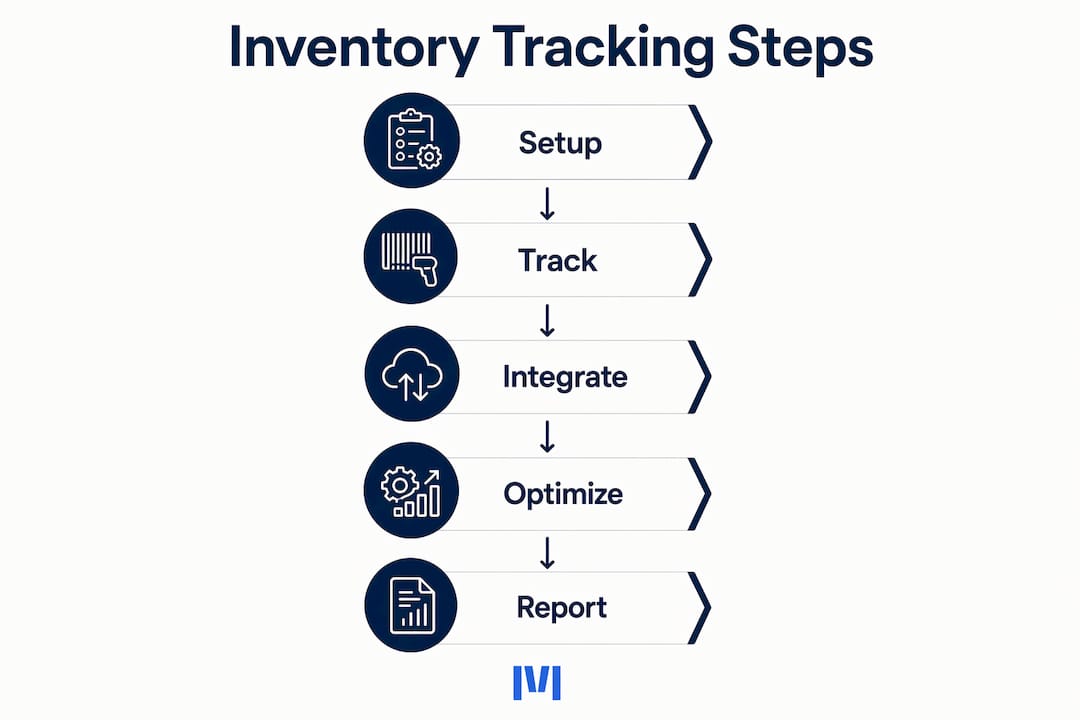
Here is how the workflow runs end to end:
- Technician opens a work order on the mobile app; parts requirements are pulled from the job template
- System checks bin-level stock across warehouse and assigned service van
- Parts are reserved and a pick list is generated; the technician scans items on issue
- Consumed parts are automatically linked to the job invoice and deducted from stock
- If stock falls below the reorder minimum, a purchase order is triggered to the supplier
That closed loop means your workshop service workflows and parts data stay synchronized without anyone manually updating a spreadsheet after the fact. Unit history accumulates automatically: every part fitted to a serial number is recorded, which feeds warranty recovery and future service scheduling.
Pro Tip: For field vans and remote sites, offline-capable mobile scanning is not optional — it is the only way to close the “last yard” visibility gap. Without it, parts leave the warehouse and disappear from your records until someone manually reconciles at the end of the week.
How to choose the right inventory tracking system for your dealership
The equipment dealer market has no shortage of inventory software options, but most are built for retail or generic warehousing. The selection criteria below are specific to dealership operations.
Key selection criteria:
- Industry focus: does the vendor understand serialized equipment, rental fleets, and workshop workflows?
- Serialized asset handling: can it track individual units by serial number with full lifecycle history?
- Field app and offline support: does the mobile app work without a network connection?
- Accounting integrations: live Xero/MYOB connector, not a batch export
- Implementation support: does the vendor provide data migration assistance and training?
- Scalability: can you add modules (rental, field service, CRM) without re-platforming?
Questions to ask vendors:
- How does your Xero/MYOB connector handle GST tax codes and purchase order matching?
- What does your data migration process cover — parts master, serialized units, bin locations, pricing?
- Can your mobile app operate offline and sync when connectivity is restored?
- How do you handle the distinction between serialized asset tracking and consumable inventory?
- What does your implementation timeline look like for a dealership our size?
Red flags to watch for: siloed modules that don’t share a common parts master; legacy architecture with no mobile app; audit trails that can’t be exported; no live accounting connector. Work-order platforms that integrate with inventory and field service can also inform your evaluation of how those workflows should connect.
What to expect during implementation and rollout
A realistic implementation for a mid-size equipment dealership runs in phases. Rushing to go live across all modules simultaneously is the most common cause of poor adoption.
Phased rollout sequence:
- Discovery and data cleanup (weeks 1–2): audit your parts master, identify duplicate SKUs, and map bin locations
- Data migration (weeks 2–4): import parts master, serialized unit records, supplier data, pricing, and bin locations
- Pilot go-live (weeks 4–6): run parts and warehouse module with a small team before expanding
- Workshop and field service (weeks 6–10): connect work orders to parts stock; train technicians on mobile scanning
- Sales and CRM (weeks 10–12): link unit inventory to deal sheets and sales pipeline
- Optimization (months 3–6): review zero-stock patterns, adjust reorder minimums, and refine reporting
Migration checklist items:
- Parts master with supplier codes and pricing tiers
- Serialized unit records with build dates and current status
- Bin locations and warehouse layout
- Supplier lead times and preferred vendor rules
- Open purchase orders and outstanding work orders
Moderndms is designed for setup in under an hour for the core platform, with modular rollout so you can expand at your own pace without a big-bang go-live.
Common pitfalls dealers run into — and how to avoid them
Mixing asset tracking with consumable inventory is the most damaging structural mistake. A serialized excavator and a box of hydraulic fittings require completely different data models. Treat them as separate records from the start, even if they appear in the same reporting dashboard.
Ignoring last-yard visibility means parts leave the warehouse and effectively disappear. Barcode scanning on issue and mobile updates from field vans are the only reliable fix. Without them, your stock records are accurate only at the warehouse door.
- Static reorder points that never get reviewed: set a calendar reminder to audit zero-stock events monthly. Tracking these over a 12-month window reveals true demand patterns and prevents repeated stockouts on the same SKUs.
- Over-customizing before go-live: start with standard workflows and adjust after you have real usage data. Custom fields added before go-live often duplicate data that the system already captures.
- Skipping the audit trail setup: every stock adjustment should carry a reason code and a user stamp. Without this, you cannot distinguish a legitimate write-off from a data entry error.
Pro Tip: Run a zero-stock report at the end of each month for the first six months post-go-live. Parts that hit zero repeatedly are telling you your minimums are wrong — adjust them before they cause a job delay.
Why a purpose-built DMS is the right choice for equipment dealers
Generic inventory software handles boxes in a warehouse. Equipment dealers need a system that understands serial numbers, rental contracts, warranty claims, and GST-compliant invoicing — all connected. That is the case for a purpose-built dealer management system.
Moderndms is built specifically for Australian equipment dealerships, covering parts and warehouse management, serialized asset lifecycle tracking, workshop and field service, and live Xero/MYOB accounting connectors. The platform’s modular design means you can start with parts and inventory, then add service, rental, and sales modules as your team’s confidence grows.
Moderndms users report saving up to 10 hours per week in administrative tasks after replacing disconnected spreadsheets and legacy software with the integrated DMS platform. The parts and warehouse module, combined with live Xero integration, eliminates the manual reconciliation cycle that costs most dealerships half a day every week.
The asset lifecycle module handles the serialized equipment side: build orders, commissioning records, unit history, and warranty recovery all live on the same equipment card. When a technician fits a part in the field, that record flows back to the unit history automatically — no manual update required.
Key Takeaways
A purpose-built inventory tracking system integrated into a dealer DMS is the most direct way for Australian equipment dealers to reduce emergency procurement, recover admin time, and maintain GST-compliant records across all stock locations.
| Point | Details |
|---|---|
| Separate your data models | Track serialized assets and consumable parts as distinct records to protect warranty recovery and reporting accuracy. |
| Close the last-yard gap | Deploy offline-capable mobile scanning so parts tracked after leaving the warehouse, not just at the warehouse door. |
| Use 12-month zero-stock data | Review zero-point events over a full year to set accurate reorder minimums and prevent repeat stockouts. |
| Require live accounting connectors | Demand a live Xero or MYOB connector — not a CSV export — for GST-compliant invoicing and reconciliation. |
| Moderndms for Australian dealers | Moderndms delivers modular DMS with integrated parts, asset lifecycle, workshop, and Xero/MYOB connectors built for Australian compliance. |
The real gap most dealers are still living with
Most equipment dealers we speak with are not failing because they lack ambition or resources. They are failing because their tools were not built for them. A retail inventory app does not know what a serial number means. A US-built DMS does not understand Australian GST. A spreadsheet cannot tell you that the same 33 parts have been at zero stock for seven consecutive days.
The honest reality is that inventory tracking only delivers its full value when it is connected — to your workshop, your field vans, your accounting system, and your sales pipeline. A standalone inventory app solves one problem and creates three handoff points where data goes stale. The dealers who recover the most margin are the ones who treat inventory as a module inside a connected system, not a separate tool they manage alongside everything else.
Australian dealers deserve software built for the way they actually operate: GST-compliant, serialized-asset-aware, and capable of following a part from the warehouse shelf to the job site and back to the invoice. That is not a luxury feature set. It is the baseline.
Moderndms: purpose-built inventory tracking for Australian equipment dealers
Australian equipment dealers running parts across multiple locations, serialized units through workshop bays, and field technicians across remote sites need more than a stock counter. Moderndms gives your team a single platform covering parts and warehouse management, serialized asset lifecycle tracking, workshop service, rental fleet, and live Xero/MYOB integration — all built for Australian GST compliance from the ground up.
Setup takes under an hour for the core platform. Modular rollout means you start where the pain is greatest — typically parts and inventory — and expand into service, sales, and rental at your own pace, with no long-term contract forcing your hand. Your data stays yours.
Ready to see how it works for your dealership? Request a demo or explore the industrial equipment dealer platform to see the full module set.
Useful sources and further reading
- LYIT Underground Mining Parts Tracking Case Study — Real-world data on zero-stock events and how last-yard tracking drives reorder adjustments in heavy equipment operations.
- Cyder: Heavy Equipment Field Services Case Study — Operational gains from integrating inventory with field service and workshop management.
- How Asset Tracking Elevates Inventory Management — Kynection — Explains the distinction between asset tracking and inventory management and how integration improves decisions.
- Choosing the Right Dealer Management Software in Australia — Assetex — Practical checklist for Australian dealers evaluating DMS platforms, covering inventory, CRM, and valuation requirements.
- Why Australian Equipment Dealers Need Better Inventory Management Software — Assetex — Covers marketplace integrations, admin time reduction, and the case for connected inventory in the Australian market.
- Moderndms Parts and Warehouse Management — Feature detail on parts masters, bin locations, stock adjustments, and audit trails within the MDMS platform.
- Moderndms Heavy Equipment Dealer Page — Full DMS capability overview for heavy equipment dealers, including implementation and module options.
- Best Work Order Software for Maintenance Teams — Firmanager — Third-party analysis of work-order platforms and how they integrate with inventory and field service workflows.
FAQ
What is an inventory tracking system for equipment dealers?
An inventory tracking system is a centralized platform that manages parts stock, serialized equipment, and unit history in real time, connecting service, sales, and accounting workflows so dealers can prevent stockouts and reduce emergency procurement.
How does inventory tracking integrate with Xero and MYOB in Australia?
A live connector syncs purchase orders, stock adjustments, and invoices directly with Xero or MYOB, generating GST-compliant records without manual exports. Moderndms includes native Xero and MYOB integration built for Australian dealer workflows.
What is the difference between asset tracking and inventory management?
Asset tracking follows individual serialized units (excavators, forklifts) through their full lifecycle with unique serial numbers and history records. Inventory management handles consumable parts stock levels, reorder rules, and bin locations — a purpose-built DMS keeps both as distinct data models while unifying reporting.
How long does it take to implement an inventory tracking system?
A phased rollout for a mid-size equipment dealership typically runs 10–12 weeks from discovery through sales module go-live, with the parts and warehouse module live within the first four to six weeks. Moderndms is designed for core platform setup in under an hour.
What are the most common inventory tracking mistakes equipment dealers make?
The two most damaging mistakes are mixing serialized asset records with consumable parts data, and failing to track parts after they leave the warehouse. Both are solved by a purpose-built DMS with offline-capable mobile scanning and separate data models for assets and consumables.