Get Your Core Charge Back Faster in 1–8 Weeks
By MDMS Team · 9 September 2026
Get Your Core Charge Back Faster in 1–8 Weeks
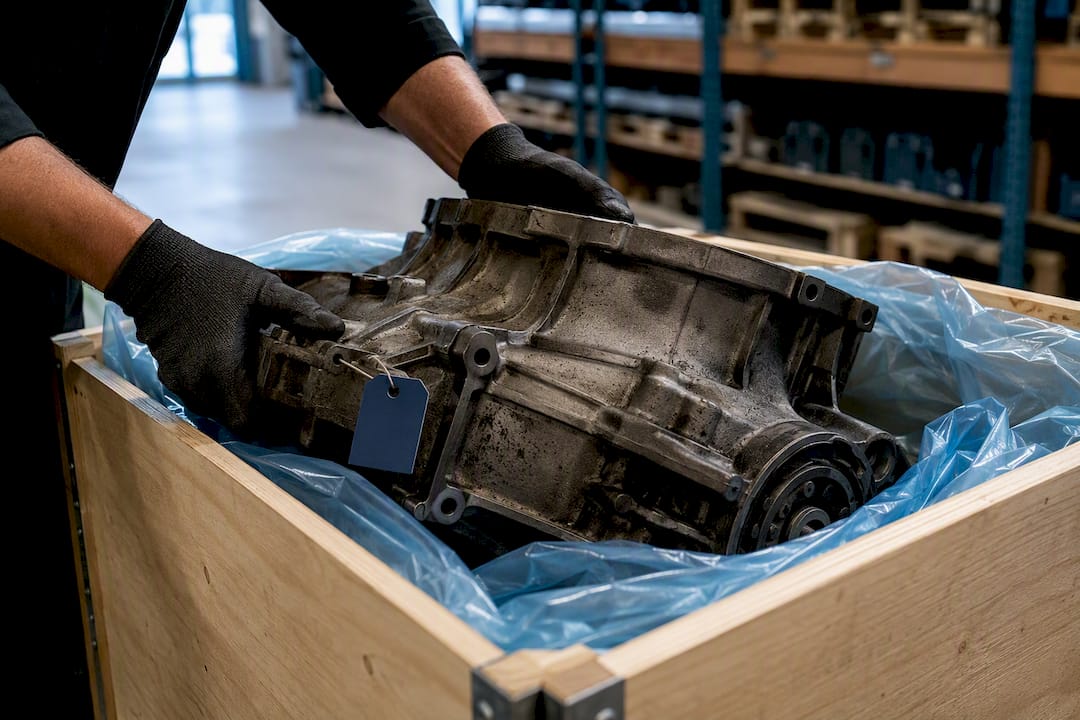
A core charge is a refundable deposit, not a permanent fee. Return the old part in rebuildable, drained condition and you get your money back, usually fastest by handing it to the counter at purchase rather than shipping it later. If you ship, follow the seller’s packing and hazmat rules to the letter. Keep your receipt and part number so the refund ties back to the original charge.
TL;DR:
- Returning a core generally involves full drainage of fluids, secure packaging, and complying with hazmat rules, especially for batteries, to avoid shipment delays.
- In-store returns usually yield refunds immediately or within a few days, whereas shipping returns can take one to eight weeks depending on inspection and carrier transit times.
- Common core parts such as alternators, starters, and transmissions carry higher deposits the more complex and rebuildable the component.
- Rejected cores often fail due to cracks, disassembly, leaks, incorrect parts, or missed return windows, which can often be prevented with careful inspection and accurate part verification.
- Automating core return tracking significantly improves refund recovery rates, reducing unclaimed credits and ensuring quicker processing for both buyers and dealers.
Table of Contents
- What Is a Core Charge, and Why Does It Exist?
- Which Parts Typically Carry a Core Charge?
- How to Return a Core, Step by Step
- Packing, Shipping, and Hazmat Rules That Can Kill Your Refund
- Why Core Returns Get Rejected (and How to Avoid It)
- How Long Does a Core Refund Actually Take?
- What to Do if Your Refund Is Delayed or Denied
- Why Clear Core Return Processes Matter on Both Sides of the Counter
- Sources
- FAQ
What Is a Core Charge, and Why Does It Exist?
A core charge sits as a separate line on your receipt, above the actual price of the part. You pay both amounts up front, but only the part price is truly yours to keep. The core portion comes back to you once you return the old, “core” unit, meaning the worn component being replaced.
Remanufacturers rely on that returned core to rebuild a new unit around the original housing, which keeps replacement costs lower and cuts down on scrapped metal. A core charge functions as a deposit that maintains a steady stream of rebuildable units instead of relying entirely on new castings, a key aspect explained in The Australian automotive aftermarket pattern that supports this circular supply chain. Some sellers waive the charge entirely if you bring your old core to the counter at the time of purchase, since that removes the shipping and tracking step altogether.
Which Parts Typically Carry a Core Charge?
Not every part carries a core deposit, but a handful of categories almost always do. Watch for a line labeled “core” or “deposit” in your order summary, since it’s easy to miss when you’re focused on the part price.
Common parts that carry core charges include alternators, starters, brake calipers, master cylinders, torque converters, complete transmissions, power steering pumps, racks, and batteries such as lead-acid units.
Generally, the more complex and rebuildable the part, the higher the core charge. A remanufactured transmission core is worth far more to a rebuilder than a simple pump housing, and the deposit reflects that.
How to Return a Core, Step by Step
The process splits into two paths: handing the part back in person, or shipping it back to the seller. Both work, but one is noticeably faster.
In-store returns:
- Bring the old part to the counter along with your original receipt.
- Let staff confirm the part number and inspect the core on the spot.
- Receive credit immediately, often refunded straight to your original payment method.
Ship-back returns:
- Find and print the prepaid return label from the seller’s website or confirmation email.
- Drain all fluids completely and seal any openings before packing.
- Pack the core in its original box when possible, along with a copy of your receipt and any return declaration the seller requires.
- Drop the package at the designated carrier or schedule a pickup.
- Save the tracking number and note the manufacturer’s return-window deadline, since most policies run 30 to 90 days.
- Watch for OEM acknowledgment or a credit posting notice from the seller confirming the core passed inspection.
Pro Tip: Photograph the core from several angles before you box it up. If a rejection dispute ever comes down to “it was already cracked,” you’ll have proof it wasn’t.
Larger OEM networks run structured portals for this exact process. ZF Aftermarket’s CorExpedia program, for example, requires a formal declaration and packing instructions, and it even maintains a “core bank” balance for customers who occasionally over-return units. Centralizing the paperwork this way cuts down on the shipping and acceptance errors that otherwise stall refunds.
Packing, Shipping, and Hazmat Rules That Can Kill Your Refund
Draining fluids isn’t optional. Any part that held oil, coolant, or transmission fluid needs to be fully drained and its openings sealed before it goes in a box. Loose bolts, sensors, or small components should go in a separate bag so they don’t rattle around and puncture the packaging during transit.
Batteries deserve extra caution. Lead-acid batteries are classified as hazardous material, and carriers can and will refuse an undeclared battery shipment outright. If your seller provides a prepaid label specifically for battery cores, use it exactly as instructed rather than a generic shipping label.
- Drain and seal all fluid openings
- Bag loose small parts separately
- Declare lead-acid batteries as hazmat or use the seller’s dedicated label
- Follow the return portal’s printed packing declaration exactly
A noncompliant shipment doesn’t just delay your refund. It can get the package returned to you, or refused by the carrier before it ever reaches the seller.
Why Core Returns Get Rejected (and How to Avoid It)
Sellers and OEMs reject cores for a fairly predictable set of reasons, and most of them are avoidable with a little care before you pack the box.
- A cracked, welded, or heat-warped housing that can’t be rebuilt
- A disassembled or incomplete core, missing brackets, sensors, or original hardware
- Visible fluid leaks or contamination from improper draining
- The wrong part returned, or a return sent after the window closed
Global OEM programs like Mopar’s GCRS standards spell out exact chargeback amounts for issues like missing containers or improperly drained units, and some infractions carry a full chargeback on the entire core value. That’s the deposit gone, not reduced.
Pro Tip: Before boxing anything, double check the part number against your invoice. A core returned under the wrong SKU is one of the most common, and most avoidable, rejection reasons.
How Long Does a Core Refund Actually Take?
In-store returns move fast. Hand over the part and receipt, and most sellers credit you immediately or within a few business days once the counter staff confirms the core matches.
Ship-back returns take longer, typically one to eight weeks depending on carrier transit time and how backed up the seller’s inspection queue is. The core has to physically arrive, get inspected against acceptance criteria, and get logged before the refund posts.
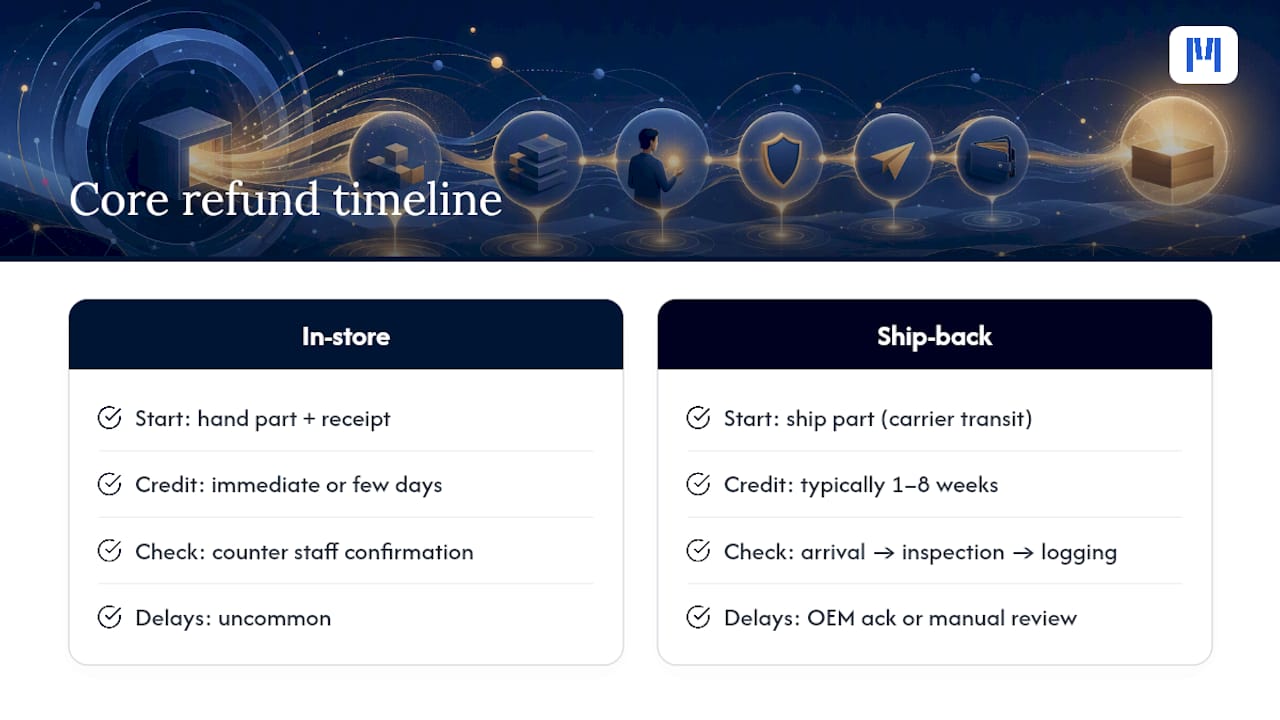
Delays usually trace back to one of two things: slow OEM acknowledgment sitting unreconciled against your original charge, or the core getting flagged for manual chargeback review. If your refund is taking longer than the seller’s stated window, ask directly for the OEM acknowledgment or inspection report tied to your return. That single document usually explains exactly where things stand.
What to Do if Your Refund Is Delayed or Denied
Don’t wait indefinitely on a refund that should have posted weeks ago. Build your case methodically and escalate in order.
- Gather your proof: original receipt, photos of the core’s condition before packing, tracking number, and the return declaration or packing slip you included.
- Contact the seller’s returns or customer service desk and ask specifically for the OEM acknowledgment, inspection findings, or the exact chargeback reason in writing.
- If the seller can’t resolve it, escalate to the manufacturer’s own returns portal, which often has more visibility into inspection status than a retail counter does.
- If you still hit a wall, file a complaint with your local consumer protection body, using your documented timeline and evidence as backup.
Having dates, photos, and tracking numbers ready before you call turns a vague “it’s still processing” conversation into a specific, resolvable one.
Why Clear Core Return Processes Matter on Both Sides of the Counter
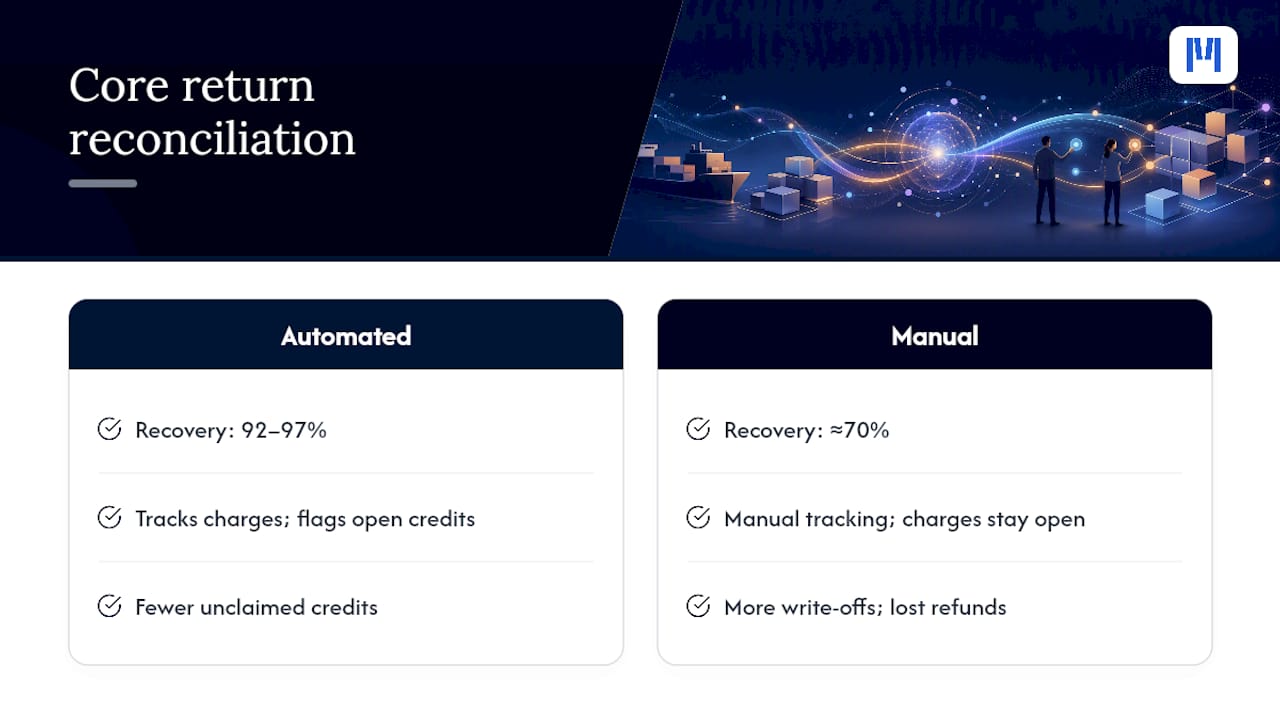
Buyers lose refunds for the same reason dealers lose margin: nobody closes the loop between the charge and the credit. Manual tracking on a parts counter frequently means old core charges just sit open, unmatched against an OEM acknowledgment that arrived weeks earlier. That gap is exactly why sellers who offer prepaid labels and clear written return instructions tend to process refunds faster, since the paperwork trail is already built in.
On the dealer side, automated reconciliation makes a measurable difference. Shops that automate core-return matching recover 92 to 97 percent of eligible credits, compared to roughly 70 percent under manual tracking. A dealer management system that logs core charges against inventory and flags open credits automatically isn’t just an internal efficiency play. It’s what lets a parts department actually honor the refund timeline it promises customers.
— ModernDMS
If you run parts operations and recognize this reconciliation gap from the other side of the counter, ModernDMS’s parts and warehouse tools are built to close it, tracking core charges from the original sale through OEM credit posting so fewer refunds fall through the cracks. The same logic that helps a buyer get their deposit back faster is what helps a dealership stop writing off unclaimed credits. Equipment dealers running heavy equipment operations face this exact reconciliation challenge at higher volume, where a handful of missed core credits can add up to real money by year end.
Sources
- Lead acid battery regulations — transport | Battery Rescue Australia
- Core return guidelines — CorExpedia (ZF Aftermarket) — 2026 PDF
- Parts core returns: ROI of automation vs manual (2026) | US Tech Automations
- How does a core charge work: fees, returns, and refunds | LegalClarity
FAQ
Do Core Charges Get Returned?
Yes. A core charge is a refundable deposit, not a fee, and you get it back once you return the old part and it passes the seller’s inspection for completeness and condition.
Do You Get Money Back for a Core Charge?
You do, provided the returned core is complete, properly drained, and undamaged. Sellers issue the refund as store credit, cash back, or a credit to your original payment method depending on how you originally paid.
What Are Core Returns?
A core return is the process of sending back the old, worn part that a remanufacturer will rebuild, either by handing it in-store at purchase or shipping it back using a prepaid label within the seller’s return window.
How Long Do I Have to Get My Core Charge Back?
Most sellers set a return window of 30 to 90 days from the purchase date, though the exact deadline varies by seller and part type, so check your receipt or return paperwork for the specific cutoff.