Close Returns in 6 Steps: Supplier RMA Process for Procurement Teams
By MDMS Team · 1 September 2026
Close Returns in 6 Steps: Supplier RMA Process for Procurement Teams
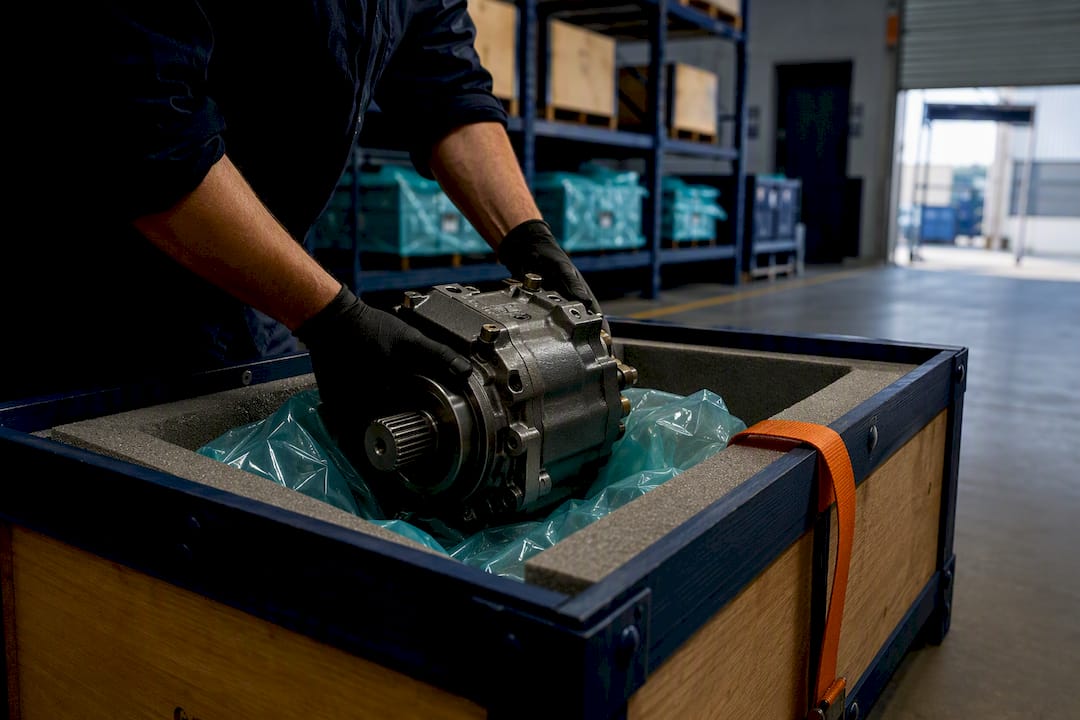
A supplier RMA is the formal authorization that lets you return defective, wrong, or excess goods to a supplier and track the case through to a credit, repair, or replacement. The immediate move when you spot a problem: raise an RMA request with the PO number, SKU, quantity, and photos before anything leaves the warehouse. This return to supplier (RTS) mechanism, tracked in systems from spreadsheets to a full dealer management system like Moderndms, protects your inventory records and your cash.
TL;DR:
- A supplier RMA mainly covers the physical return process, case tracking, and recording the disposition, not the supplier’s investigation or root cause analysis.
- Clear documentation, including PO number, serials, photos, and shipping evidence, is crucial for faster approval and avoiding delays.
- Assigning ownership to procurement, warehouse, supplier, and finance teams prevents cases from stalling and ensures timely follow-up.
- Implementing integrated systems like dealer management platforms automates case updates, inventory holds, and credit reconciliation, saving up to 10 hours weekly.
- Escalate to a SCAR when multiple defects or safety issues occur, requiring detailed root cause analysis and corrective actions from the supplier.
Table of Contents
- What Does a Supplier RMA Process Actually Cover?
- How Do You Run a Supplier RMA From Request to Closure?
- Who Owns Each Step in the Supplier Return Process?
- What Documentation Speeds Up RMA Approval?
- What Should Supplier RMA Policy and SLA Terms Cover?
- Can RMA Portals and ERP Integration Replace Email Chains?
- When Does a Return Become a SCAR Instead of an RMA?
- Supplier RMA Checklist You Can Put Into an SOP Today
- How Integrated Systems Change Supplier RMA Management
- Ready to Automate Your Supplier RMA Workflow?
- Sources
- FAQ
What Does a Supplier RMA Process Actually Cover?
An RMA covers the logistics of getting goods back to a supplier and recording what happens to them. It answers three questions: what’s wrong, who’s paying for it, and how the transaction gets closed out in your books. That’s a narrower job than it sounds, and mixing it up with adjacent quality processes is where a lot of procurement teams lose time.
The RMA is not the same thing as a non-conformity record (NCR) or a supplier corrective action report (SCAR). An NCR documents that a specific batch or shipment failed to meet spec. A SCAR goes further, demanding the supplier investigate why the failure happened and prove it won’t recur. The RMA sits underneath both: it’s the mechanism that physically moves the bad goods out of your warehouse and gets you a commercial remedy, whether or not a deeper quality investigation ever gets opened.
Most supplier RMA cases trace back to a small set of recurring causes:
- Manufacturing defects found at receiving inspection or during use
- Wrong items shipped against the purchase order
- Short shipments or over-shipments against ordered quantity
- Expired stock or product nearing end-of-shelf-life on arrival
- Damage in transit that shows up before the goods reach the shelf
Handled well, RMA activity does three things for your operation. It keeps inventory counts honest, because goods on hold or in transit back to a supplier get flagged rather than silently sitting in available stock. It recovers cash that would otherwise leak out through unresolved credits. And it builds a traceable record you can point to when a warranty claim surfaces months later and you need proof of what was returned, when, and why. Academic work on reverse logistics in manufacturing backs this up directly: undocumented returns handling is a recognized source of inventory and financial error, not just an administrative nuisance.
How Do You Run a Supplier RMA From Request to Closure?
The mechanics of an RMA procedure for suppliers follow a fixed sequence, whether you’re running it on paper or through automated software. Skipping a step is usually what turns a routine credit into a six-week email chase.
- Identify and quarantine the goods at receiving. The moment a defect, wrong item, or quantity mismatch is spotted, move the stock to a physically separate quarantine location. Do not let it re-enter available inventory, even temporarily.
- Collect evidence and transactional references. Pull the PO number, delivery note, invoice reference, and serial or batch numbers before you do anything else. Photograph the goods, the packaging, and any visible defect from multiple angles with a timestamp visible.
- Submit the RMA request. Send the supplier a formal request containing every reference number, the quantity affected, the reason code, and the photo evidence. Vague requests (“some units were damaged”) get slow-walked; specific ones with a PO and serials attached get answered.
- Get supplier review and an RMA number. The supplier reviews the evidence and issues an RMA number along with return instructions, packaging requirements, and confirmation of who’s paying freight. Treat this number as the case identifier for everything that follows.
- Ship the return and let the supplier inspect. Pack according to the supplier’s instructions, write the RMA number clearly on the outside of the package and the paperwork inside, and keep the shipment tracking reference on file.
- Reconcile the outcome and close the case. Once the supplier confirms disposition, whether that’s a credit note, a replacement shipment, or a repaired unit coming back, update your ERP or WMS to release the quarantine hold, match the credit to the original invoice, and close the RMA record.
That last step is where a surprising number of RMA cases quietly die. The physical return happens, the supplier issues a credit, and nobody links it back to the original purchase order in the accounting system. Six months later finance is chasing a discrepancy nobody can explain. A logged, standardized RMA workflow with a consistent paper trail is what prevents that gap, and it’s also what protects you if the same supplier issue resurfaces and you need to show a pattern.
Who Owns Each Step in the Supplier Return Process?
RMA cases stall when nobody’s clear on who does what next. Assigning ownership up front, and writing it into your supplier returns management procedure, removes the ambiguity that causes cases to sit untouched in someone’s inbox.
- Buyer (procurement): Owns the case end to end. Collects the initial evidence, raises the RMA request, chases the supplier for the RMA number, and follows up until the credit or replacement actually lands. If nobody owns follow-up, cases stall at the supplier’s desk indefinitely.
- Warehouse: Physically quarantines the goods, takes the photo evidence at the point of discovery, and packs the return according to the supplier’s stated requirements once the RMA number arrives.
- Supplier: Responds to the request within an agreed SLA, issues the RMA number and return instructions, inspects the returned goods on arrival, and confirms disposition (credit, repair, or replacement).
- Quality/engineering: Reviews whether the defect pattern warrants escalation beyond a simple return. A single bad unit is an RMA. Three bad units from the same supplier in a quarter is a candidate for an NCR and potentially a SCAR.
- Finance/AP: Tracks the credit note against the original invoice and PO, confirms the amount matches what was agreed, and flags any credit that hasn’t landed within the agreed timeframe.
The buyer’s role deserves emphasis here because it’s the one most often assumed to be someone else’s job. Warehouse teams handle the physical side well; they’re not positioned to chase commercial terms with a supplier’s accounts team. That follow-through has to sit with procurement, or credits simply don’t get recovered.
What Documentation Speeds Up RMA Approval?
The single biggest lever for faster RMA approval is submitting complete evidence on the first attempt. Suppliers stall requests that are missing a reference number or a clear photo, not out of obstruction, but because their own team can’t process an incomplete case any faster than yours can.
| Evidence category | Required fields or items | Why it matters |
|---|---|---|
| Order reference | PO number, SKU/part number, batch or serial number, quantity affected | Lets the supplier match the claim to their own shipping and production records instantly |
| Transaction reference | Delivery note number, invoice reference | Confirms the goods were actually received and billed, avoiding disputes over what was shipped |
| Inspection evidence | Timestamped photos, test or inspection report, quarantine location, inspecting operator’s name | Establishes the condition of the goods at discovery, which is what most suppliers require before approving a credit |
| Shipping evidence | Return tracking number or air waybill, RMA reference printed on the outer packaging and enclosed paperwork | Protects against a return going missing in transit or arriving with no way to identify which case it belongs to |
| System update | Inventory hold flag, credit note linked to original PO, RMA record marked closed | Closes the loop in the ERP/WMS so the case doesn’t quietly disappear from tracking |
Every RMA request example form you build should map directly to those five categories. A return-to-supplier workflow built around documentation at each stage, identification, segregation, inspection, communication, and reconciliation, is what makes cost recovery straightforward instead of a monthly argument with a supplier’s accounts team.
What Should Supplier RMA Policy and SLA Terms Cover?
Your supplier contracts and standard terms should spell out RMA mechanics before a dispute ever happens, not after. Negotiating freight responsibility or inspection deadlines in the middle of a live case almost always favors the supplier, because you’re the one holding the defective stock and the pressure to resolve it.
- Freight responsibility: State plainly who pays return freight for supplier-fault defects versus buyer-error returns (wrong quantity ordered, for instance). Supplier-fault returns should be freight-paid by the supplier as standard.
- Response and inspection SLAs: A common structure is five business days for the supplier to acknowledge an RMA request and issue a number, and ten business days from receipt of the returned goods to confirm inspection findings and disposition.
- Evidence and packaging standards: Specify photo requirements, packaging materials, and labeling expectations up front so returns aren’t rejected on a technicality.
- Credit terms: Set a maximum number of business days from confirmed disposition to issuance of a credit note, and define the escalation path if that deadline is missed.
- Payment withholding and SCAR triggers: Reserve the right to withhold payment on disputed invoices pending RMA resolution, and define at what point repeat issues convert into a formal corrective action request.
Pro Tip: Write the freight and SLA terms into your standard purchase order terms and conditions, not just your master supplier agreement. PO-level terms are what actually govern the transaction when a dispute lands on someone’s desk at 4 p.m. on a Friday.
Can RMA Portals and ERP Integration Replace Email Chains?
Email-based RMA tracking works until you’re running more than a handful of cases a month. Past that point, status updates get buried, RMA numbers get lost in reply chains, and nobody has a single view of what’s still open. A centralized portal gives both sides shared visibility into case status, which cuts the back-and-forth that eats up a buyer’s week.
The automation worth prioritizing includes:
- Auto-generated RMA numbers tied directly to the originating PO and receiving record
- Status updates that push to both buyer and supplier without a manual email
- Shipping label generation once the supplier confirms return instructions
- Automatic inventory holds in the WMS the moment a case is opened, with the hold releasing only on confirmed disposition
Integration matters as much as automation itself. When your RMA workflow talks directly to your WMS for inventory holds, your ERP for credit reconciliation, and your warranty module for claims tracing, a case closes itself out across all three systems instead of requiring three separate manual updates. That’s the same principle behind PO-led returns management hubs that combine QC capture with centralized dashboards for exactly this reason.
Dealer management platforms built with this in mind, Moderndms among them, centralize warranty claim and RMA workflows so a returned part updates inventory and triggers a credit reconciliation without a buyer touching three separate systems. Teams running that kind of setup report saving up to 10 hours a week in administrative tasks that used to mean chasing status across email and spreadsheets.
When Does a Return Become a SCAR Instead of an RMA?
A single defective shipment is an RMA. A pattern is a different problem, and treating it as just another return misses the point entirely. Escalate to a SCAR when you see a repeat defect rate crossing an agreed threshold, any safety or regulatory compliance incident, or cumulative cost impact that’s starting to erode the margin on that supplier relationship.
A proper SCAR request demands specifics from the supplier:
- Root cause analysis, not a restatement of the symptom
- Concrete corrective actions with target completion dates
- A named responsible person on the supplier’s side
- Verification evidence once the fix is implemented, such as inspection data from the next several shipments
A SCAR forces the investigation an RMA never requires, and closing one only happens once verification confirms the fix held. Feed SCAR outcomes directly into your supplier scorecards. A supplier who can’t close a SCAR within a reasonable window is telling you something about future sourcing decisions.
Supplier RMA Checklist You Can Put Into an SOP Today
Build these three checkpoints into your standard operating procedure, and most RMA delays disappear before they start.
- Before submitting: Confirm the PO number matches the delivery note, segregate the goods physically, and take photos before anything is moved or repackaged.
- RMA request fields: PO number, SKU/part number, batch or serial number, quantity, reason code, delivery note reference, invoice reference, and photo evidence attached.
- On receipt of the return decision: Verify the credit note amount against the original invoice, release the inventory hold in your ERP/WMS, and mark the RMA record closed with the disposition type logged.
An RMA request form template is a useful starting reference if you’re building your own fields from scratch.
How Integrated Systems Change Supplier RMA Management
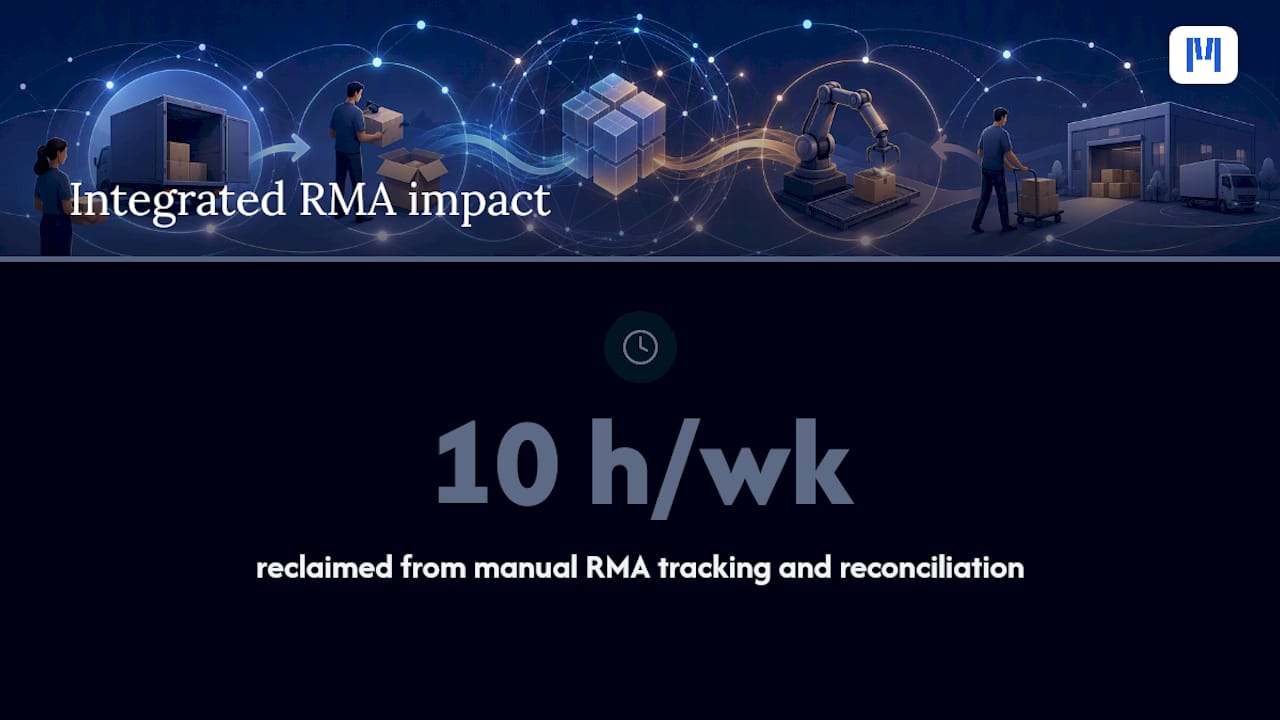
We’ve watched enough dealership operations run RMA cases through disconnected spreadsheets to know where the real cost hides: not in the returns themselves, but in the hours spent hunting for a PO reference or chasing a credit that never got reconciled. Centralizing that workflow inside a dealer management system removes the guesswork.
Moderndms ties warranty recovery, parts inventory, and finance together so an RMA case updates stock and triggers a credit match automatically. Teams already running it report reclaiming up to 10 hours a week previously lost to manual tracking, alongside direct Xero integration for reconciling credits without double entry.
— ModernDMS
Ready to Automate Your Supplier RMA Workflow?
Everything covered above, quarantine holds, evidence fields, SLA tracking, SCAR escalation, works fine on paper for a handful of cases a month. It falls apart once your dealership is running dozens of returns across multiple suppliers at once, and that’s exactly where a dealer management system earns its place.
Moderndms brings warranty recovery, parts and inventory management, and service workflows into one platform, so an RMA case updates stock, triggers a credit match, and closes itself out without three separate manual entries. Setup takes under an hour, you keep full ownership of your data with no lock-in, and the platform connects directly with Xero for clean financial reconciliation. If your team is still tracking supplier returns across email and spreadsheets, book a demo of Moderndms’s equipment dealer software and see how a modular rollout fits your current RMA volume.
Sources
For deeper detail on the mechanics covered here, the DHL guide to B2B e-commerce returns covers portal-based operational models, and Claimlane’s RMA guide breaks down the full authorization-to-resolution lifecycle in more depth.
- Guide for B2B e‑commerce returns — DHL
- RTS — Return to supplier guide — Racklify
- B2B returns management in PO‑led supply chains — WareIQ
FAQ
What Is a Supplier RMA?
A supplier RMA is the authorization a supplier issues that allows a buyer to return defective, incorrect, or excess goods and tracks that return through inspection to a final resolution like a credit, repair, or replacement.
What Is an RMA Process?
An RMA process is the structured sequence from raising a return request with evidence, through supplier approval and physical return, to inspection and closure with a documented outcome.
Does an RMA Guarantee a Refund?
No. An RMA only authorizes and tracks the return; the actual outcome, whether that’s a credit, replacement, or repair, depends on the supplier’s inspection findings and your agreed contract terms.
What Does RMA Stand for in Procurement?
RMA stands for Return Merchandise Authorization, the formal approval and reference number a supplier issues before accepting goods back for credit, repair, or replacement.