86–94% Case: Drop Ship vs Stock and SKU Rules for Equipment Dealers
By MDMS Team · 4 September 2026
86–94% Case: Drop Ship vs Stock and SKU Rules for Equipment Dealers
Most equipment dealerships get this wrong by picking one lane. The better answer is a criticality-based hybrid: stock the fast-moving and mission-critical parts, dropship or order-as-needed for low-velocity, bulky, or expensive items, and rely on network visibility plus a dealer management system to keep the split honest. Done right, this reduces working capital tied up in dead stock while protecting fill rates on the parts that actually stop a machine.
TL;DR:
- Stock critical parts that impact service commitments and rely on dropshipping or just-in-time methods for low-velocity or bulky items to reduce dead stock and improve cash flow.
- Use a data-driven SKU classification process based on criticality, velocity, size, and supplier reliability to maximize fill rates and inventory turnover.
- Implement a real-time, network-wide inventory system that predicts stockouts and coordinates stock transfers, dropship orders, and supplier performance.
- Pilot the hybrid model with select SKUs and branches, set clear success criteria, and allow time for lead-time variations to stabilize before expanding.
- Modern dealer management systems streamline classification, ordering, and reclassification of parts, saving hours and preventing margin bleed.
Table of Contents
- Drop Ship vs Stock: Comparing Costs, Speed, and Risk
- How Do You Decide Between Stock, Dropship, or Discontinuing a Part?
- What Systems Do You Need to Run a Hybrid Model?
- How to Pilot a Hybrid Stock and Dropship Model
- What Do the Benchmarks Say About Getting This Right?
- The MDMS Perspective on Hybrid Parts Strategy
- Put the Hybrid Model Into Practice With MDMS
- Sources
- FAQ
Drop Ship vs Stock: Comparing Costs, Speed, and Risk
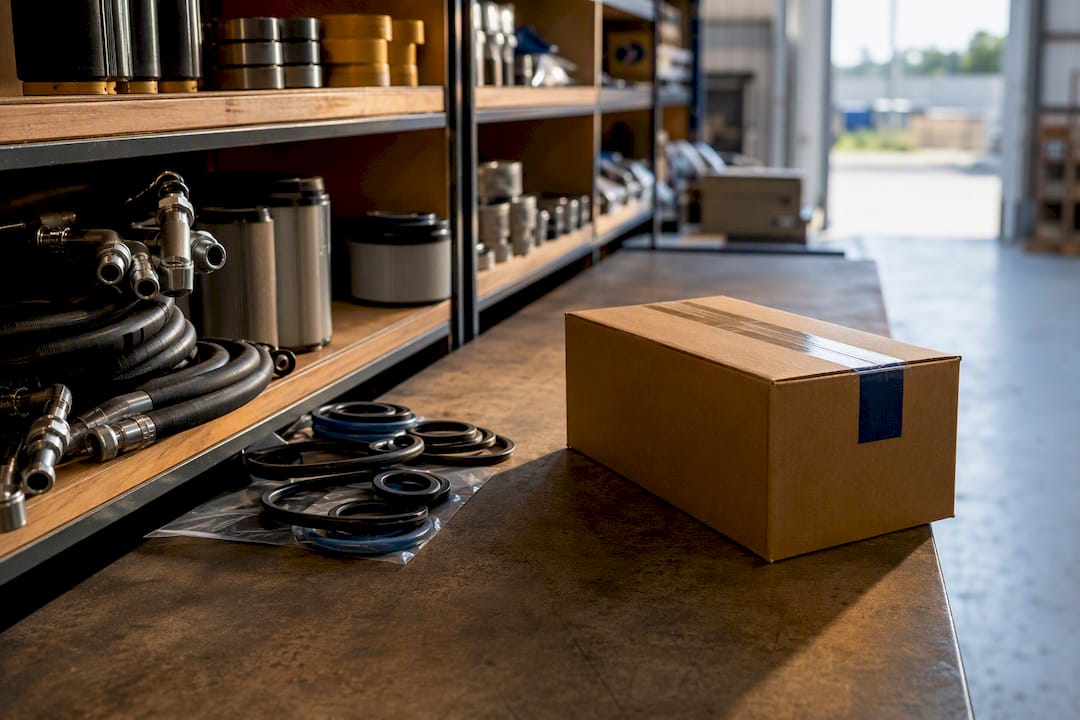
Stocking parts locally wins when speed matters most. A part sitting on your shelf ships same day, arrives in a single package, and puts you in full control of the fulfillment experience. That’s why high-velocity items and anything tied to a service commitment, like emergency filters, seals, or hydraulic hoses, almost always belong in your own warehouse.
The tradeoff is cost. Carrying inventory means tying up cash, paying for warehouse space, and absorbing the risk that a part never moves. Slow-moving specialized parts can sit 12 to 18 months or longer, quietly eroding margin the whole time. That frozen cash is often worse than the obvious storage fee, because nobody notices it until an audit forces the issue.
Dropship flips the equation. Suppliers ship directly to the customer or job site, so you carry no holding cost and no obsolescence risk on that SKU. The cost shows up elsewhere: longer or less predictable lead times, dependence on a supplier’s packing and labeling standards, and the real possibility of multiple partial shipments driving up freight costs. If a supplier misses a delivery window, you absorb the service hit even though you never touched the part.
Watch these cost drivers closely when comparing the two models:
- Inbound and outbound freight, which can erase any savings from lower carrying cost
- Supplier dropship fees, which vary widely by vendor and part category
- Return handling, which gets more complicated when a part never passed through your warehouse
- Lost-service risk when a supplier delay collides with a customer’s uptime deadline
A heavy structural assembly rarely justifies shelf space. An emergency filter almost always does.
How Do You Decide Between Stock, Dropship, or Discontinuing a Part?
Run every SKU through the same sequence instead of relying on gut feel. This is the same logic behind what the industry calls a “SKU diet,” where parts get sorted into stock, dropship, just-in-time, or discontinue categories based on actual performance data rather than habit.
- Classify by criticality. Stock anything that blocks a service commitment or grounds equipment your customers depend on.
- Measure velocity and turns. Fast movers earn shelf space; slow movers are dropship or just-in-time candidates by default.
- Evaluate supplier lead time and reliability. A supplier with inconsistent delivery windows shouldn’t own your critical-path parts.
- Weigh size, packaging, and freight economics. Bulky or heavy items often cost more to hold than to ship direct.
- Model carrying cost against dropship fees. Calculate the break-even point where holding a part stops making financial sense.
- Set policy rules and a review cadence. SKU classifications aren’t permanent; revisit them quarterly as demand shifts.
One dealership network applied exactly this kind of segmentation and saw fill rates climb from 86% to 94%, with inventory turns improving from 3.3 to 5.5. That’s not a minor tweak. It’s the difference between a parts department that reacts to shortages and one that predicts them.
Pro Tip: Run the SKU diet exercise on your bottom 20% of movers first. That’s usually where obsolete inventory and unnecessary carrying cost concentrate.
What Systems Do You Need to Run a Hybrid Model?
A hybrid approach only works if your team can see the whole network, not just their own branch. Real-time visibility into on-hand quantities, open purchase orders, and committed stock across every location prevents the duplicate ordering and delayed transfers that quietly drive both stockouts and overstock.
Forward-looking availability signals matter just as much as current counts. Metrics like PAR (parts at risk) and RAP (replenishment action point) predict availability risk before it becomes a stockout, giving planners time to transfer stock, expedite an order, or approve a substitution instead of scrambling on an emergency purchase.
For dropship specifically, your system needs to handle:
- Automated PO generation the moment a dropship rule triggers
- Shipment tracking visible to both your team and the customer
- Packing and labeling standards agreed with each supplier
- Returns handling for parts that never touched your warehouse
- Documented supplier SLAs with real consequences for missed windows
Connected dealer inventory platforms have measurably cut customer wait times for service parts once network-wide visibility replaced branch-by-branch guesswork. An integrated dealer management system supports stocktake, replenishment, and supplier management alongside dropship PO workflows, so your team tracks fill rate, inventory turns, time-to-fulfill, and emergency purchase frequency from one dashboard instead of piecing it together across spreadsheets.
How to Pilot a Hybrid Stock and Dropship Model
Don’t roll this out network-wide on day one. Pilot it first.
- Pick pilot SKUs and branches. Choose a mix of critical and non-critical items at one or two locations, not your whole catalog.
- Lock in supplier SLAs. Test dropship packaging, branding, and returns handling before committing volume.
- Configure DMS routing rules. Automate PO generation and status updates so exceptions get flagged, not buried.
- Set success criteria upfront. Target specific fill-rate and turns improvements, plus a target reduction in emergency buys.
- Train your parts counter and service teams. They need to explain the model to customers confidently, not apologize for it.
- Run the pilot, then expand in phases. Widen the SKU list and branch count only after the data supports it.
Pro Tip: Give your pilot at least one full replenishment cycle before judging results. A single month of data will make dropship look worse than it is, since lead-time variance hasn’t averaged out yet.
What Do the Benchmarks Say About Getting This Right?
The financial upside is not theoretical. Optimized parts departments can represent 25 to 35% of a dealership’s fixed operations gross profit, which makes SKU policy a profit lever, not just a logistics detail.
- Fill rates improved from 86% to 94% after SKU rationalization at one dealer network
- Inventory turns rose from 3.3 to 5.5 in the same case
- Revenue showed a meaningful increase once slow movers stopped tying up capital
Network visibility, not simply more inventory, is what reduces both stockouts and excess holdings across a dealer network. The fix isn’t buying more parts. It’s knowing exactly where the parts you already have are sitting.
The MDMS Perspective on Hybrid Parts Strategy
We built MDMS around the belief that dropship and stocking decisions should be data-driven, not habitual. Stocktake, cycle counts, replenishment, and supplier management live in one module, so dropship POs route automatically once a SKU crosses your threshold. Dealers using this approach report saving up to 10 hours a week previously lost to manual reconciliation. Start by classifying your top 50 SKUs by velocity, and let the system suggest the split.
— ModernDMS
Put the Hybrid Model Into Practice With MDMS
Running a criticality-based hybrid manually means juggling spreadsheets, supplier emails, and branch phone calls every time a SKU needs reclassifying. MDMS replaces that with one connected system: stocktake, replenishment, and supplier management sit alongside dropship PO automation, so a part’s classification and its fulfillment path update together instead of drifting apart.
Setup is designed to be quick, and you retain full ownership of your data without lock-in if your needs change. The parts and warehouse module handles the SKU segmentation this article walks through, while integrations with platforms like Xero keep your finance team aligned on carrying cost versus dropship fees. If you manage a heavy equipment, construction, or industrial dealership, the equipment dealer management platform is built specifically for this parts mix. Book a demo and bring your current fill-rate numbers. Within the first session, you’ll see exactly where your SKU policy is bleeding margin.
Sources
- Parts Department Optimization - Drive Profitability Beyond the Service Lane - 2026 Guide
- Spare Parts Inventory Optimization Guide | Pull Logic
- Is it time to go on a SKU diet? when to dropship, stock, order as needed, or stop selling a part altogether - Hydrian
- A connected dealer solution cuts customer wait time for service parts at Terex
FAQ
Is Dropshipping Cheaper Than Stocking Parts?
Dropship eliminates carrying cost and obsolescence risk, but freight and supplier fees often offset those savings on high-frequency parts. Stocking usually costs less per unit for fast-moving SKUs once you account for expedited freight on dropshipped emergency orders.
Which Parts Should Never Be Dropshipped?
Parts tied to uptime-critical service commitments, like common filters, seals, or hydraulic fittings, should stay in stock so a supplier delay never becomes a customer’s downtime problem.
How Often Should We Review SKU Classifications?
Review quarterly at minimum, since demand and supplier reliability shift throughout the year. A part that made sense to stock last quarter may qualify for dropship after a slowdown in demand.
Can MDMS Handle Both Stocked and Dropshipped Parts?
Yes. MDMS supports stocktake, replenishment, and supplier management for stocked SKUs alongside automated dropship purchase orders, so both fulfillment paths run from the same parts and warehouse module.