Pre-Delivery Inspection: What Car Buyers Need to Check
By MDMS Team · 9 August 2026
Pre-Delivery Inspection: What Car Buyers Need to Check
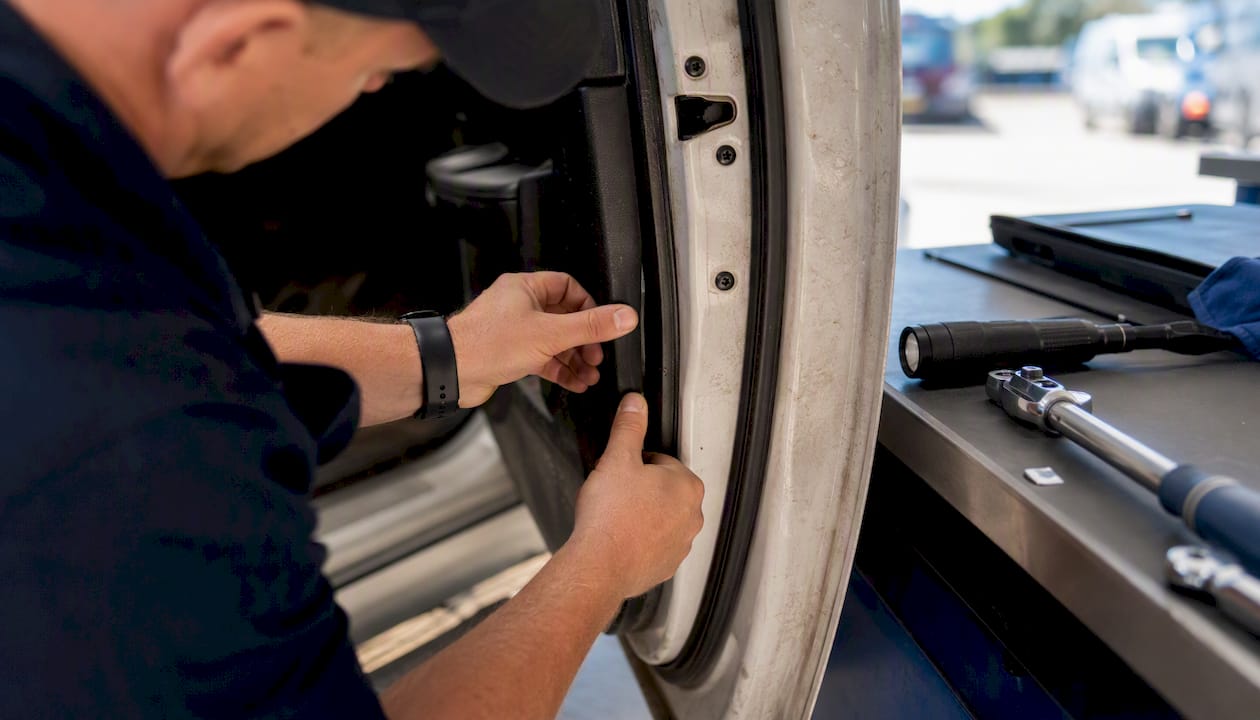
A pre-delivery inspection (PDI) is the final quality check a dealer performs on a vehicle before handing it over to you, confirming the car arrived without transit damage and that every feature, accessory, and document specified in your contract is present and working. According to Consumer Affairs Victoria, dealers should examine the car before you collect it and demonstrate its features — but you still need to verify the work yourself.
Three actions to take at every handover:
- Verify the checklist. Walk through exterior, interior, mechanical, and documentation items before you sign anything.
- Document every defect. Photograph and note in writing any chip, scratch, missing item, or fault you find — time-stamped photos are your strongest evidence.
- Confirm remedies in writing. Any agreed repair or replacement must be recorded on the delivery paperwork with a completion date, not just a verbal promise.
Your key consumer protections sit under the Australian Consumer Law (ACL), administered by the ACCC and enforced by state bodies such as Consumer Affairs Victoria and NSW Fair Trading. These guarantees apply regardless of what a dealer’s contract says.
Key Takeaways
A pre-delivery inspection is your primary risk-management tool at vehicle handover — document every finding in writing before you sign the delivery receipt.
| Point | Details |
|---|---|
| PDI scope | Covers exterior, interior, mechanical, electrical, and documentation checks before handover. |
| Independent inspection cost | Australian independent inspections typically cost from around $130 to $350; workshop inspections with hoist access generally cost more. |
| Document everything | Time-stamped photos and a written defect list are your strongest evidence under Australian Consumer Law. |
| Roadworthy vs. pre-purchase | A roadworthy certificate confirms minimum safety standards only; a pre-purchase inspection assesses full mechanical condition. |
| Dealer PDI timing | Most dealer PDIs take 30–60 minutes; independent inspections run 45–90 minutes or longer with diagnostics. |
Table of Contents
- What does a pre-delivery inspection actually check?
- Who performs PDIs and when do they happen?
- How does a dealer PDI differ from a pre-purchase inspection or roadworthy?
- What should you do if a car fails the PDI?
- How long does a PDI take, and what should you check at handover?
- When should you get an independent pre-purchase inspection?
- A practical note from a dealer-operations perspective
- Sources
- FAQ
What does a pre-delivery inspection actually check?
A thorough PDI covers five areas. Use this as your working checklist at handover.
Exterior
- Bodywork, paint finish, and panel gaps — look for chips, scratches, dents, and misaligned panels
- All glass (windscreen, windows, mirrors) for chips or cracks
- Badges, trim strips, and rubber seals seated correctly
- Tyre condition and correct inflation on all four wheels, plus the spare
- Wheel rims for kerb damage or scuffs
- Tow bar, roof rails, or any factory-fitted accessories specified in your contract
Interior
- Seat upholstery, trim panels, and headlining for tears, stains, or misalignment
- All switches, windows, sunroof, and seat adjusters functioning correctly
- Infotainment system paired, software updated, and navigation maps loaded
- Bluetooth, Apple CarPlay, Android Auto, and USB ports tested
- Accessory options listed on your deal sheet — floor mats, cargo liners, tow-ball covers
Under-bonnet and mechanical
- Fluid levels: engine oil, coolant, brake fluid, power steering fluid, and washer reservoir
- No visible leaks on hoses, belts, or connections
- Battery terminals clean and secure
- No warning lights on the instrument cluster after a cold start
Undercarriage
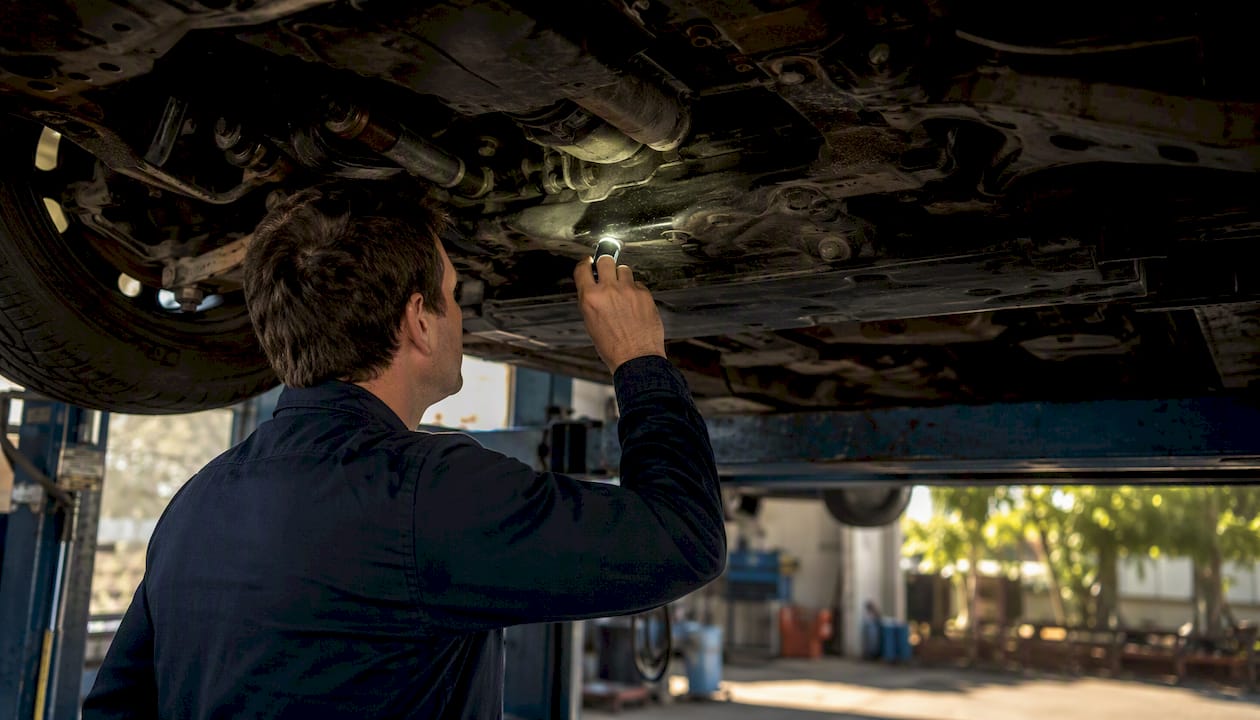
A hoist-level check is the most thorough option, but it requires workshop access. Look for chassis damage, rust, or suspension components that appear bent or freshly repaired. For a used vehicle, this step is non-negotiable.
Lights, electrical, and HVAC
Run through every light: headlights (low and high beam), fog lights, indicators, brake lights, reverse lights, and hazard lights. Test the horn. Run the air conditioning on both heating and cooling for at least two minutes to confirm it reaches temperature.
Documents and items
- Owner’s manual and service book (stamped with delivery date and odometer)
- All keys and key fobs
- Build plate and compliance plate matching your contract’s specifications
- Any roadworthy certificate or safety certificate required in your state
- Accessories and extras listed on the purchase contract
Pro Tip: Before you sign the delivery receipt, write “subject to further inspection” next to your signature if you have not had time to check every item. This preserves your right to raise issues discovered within a reasonable period after collection.
The FCAI inspection guidelines define thresholds for what counts as transit damage and what dealers typically classify as acceptable cosmetic tolerances. Minor scratches invisible at one meter may fall outside the remediation threshold — which is exactly why you need to inspect closely and document anything you find before signing.
Who performs PDIs and when do they happen?
The answer depends on whether you are buying new or used, and through a dealer or a private seller.
New car — dealer PDI. The selling dealer, or a manufacturer-appointed preparation center, carries out the PDI before your scheduled collection. This is included in the purchase price. The dealer checks for transit damage, installs accessories, and updates software. You pay nothing extra for this step, but the inspection is aligned to the dealer’s and manufacturer’s standards, not yours.
Used car — independent pre-purchase inspection. For any used vehicle, whether purchased from a dealer or a private seller, you arrange and pay for an independent inspection before you commit to buying. This is a buyer-funded, objective condition snapshot. Shell Australia’s motorists advice hub describes it as a thorough mechanical assessment that helps buyers identify current problems and negotiate or walk away — but notes it is not a legal guarantee against future failures.
Private sale timing. Book the independent inspection before you exchange any money or sign a contract. Once you have paid, your negotiating position weakens considerably.
Who pays for defect repairs? On a new car, the dealer is responsible for rectifying faults found during the PDI before handover. On a used car, the inspection report becomes your negotiation tool — the seller may agree to fix items, reduce the price, or you may choose to walk away.
How does a dealer PDI differ from a pre-purchase inspection or roadworthy?
These three checks serve different purposes, and confusing them is one of the most common mistakes buyers make.
| Check type | Purpose | Who organizes and pays | Depth | Legal / consumer-rights effect |
|---|---|---|---|---|
| Dealer PDI (new car) | Transit damage and handover preparation | Dealer organizes; included in purchase price | Manufacturer-standard checklist; cosmetic and functional | Dealer must deliver a vehicle of acceptable quality under ACL; PDI supports this obligation |
| Independent pre-purchase inspection (used car) | Objective mechanical and structural condition snapshot | Buyer organizes and pays | Engine, gearbox, suspension, brakes, underbody, diagnostics, road test | Gives buyer negotiation leverage; not a legal guarantee; supports price reduction or withdrawal |
| Roadworthy / safety certificate (RWC) | Confirms minimum legal safety standards for registration transfer | Seller typically arranges; required by law in most states | Brakes, lights, tyres, steering — minimum safety threshold only | Legally required for registration in most Australian states; does NOT assess mechanical condition or future repair costs |
A roadworthy certificate confirms the car meets minimum safety standards for the road. It does not tell you whether the gearbox is about to fail or whether the engine has been rebuilt. Carinspect makes this distinction clearly: a roadworthy check and a pre-purchase mechanical inspection are not interchangeable.
Practical guidance by scenario:
- Buying new from a dealer: rely on the dealer PDI, but verify it yourself at handover using the checklist above.
- Buying used from a dealer: request the dealer’s inspection report and still consider an independent inspection for higher-value or older vehicles.
- Buying from a private seller: always get an independent pre-purchase inspection before signing anything.
What should you do if a car fails the PDI?
Finding defects is not unusual. How you respond determines whether you get a fair outcome.
New car — dealer’s responsibility. The dealer must rectify any defect that prevents the vehicle from meeting the consumer guarantees under the ACL before handover. Do not accept delivery of a vehicle with unresolved faults unless you have a written commitment specifying exactly what will be repaired and by when. Verbal promises are not enforceable.
Used car — your negotiation options. An inspection report with itemized findings and photographs is leverage. You can ask the seller to repair the faults before settlement, request a price reduction that reflects the repair cost, or withdraw from the sale if the defects are material. Auto Clinic and Parts confirms that buyers can use inspection findings to negotiate repairs, price reductions, or a clean exit.
Step-by-step if defects are found:
- Photograph every defect with time-stamped images.
- Get written repair estimates from an independent workshop.
- Present findings to the dealer or seller in writing, referencing your contract and ACL rights.
- Agree on a written repair schedule with a firm completion date, or negotiate a price adjustment.
- Keep all paperwork: the inspection report, your written correspondence, and the signed delivery receipt.
When to escalate. If the dealer refuses to act, send a formal written notice citing your ACL consumer guarantee rights. If that fails, contact your state fair trading body — Consumer Affairs Victoria, NSW Fair Trading, or the equivalent in your state. For disputes under the relevant threshold, the state civil and administrative tribunal (VCAT in Victoria, NCAT in NSW) is the next step. As OwnerInspections notes, a professional inspection report with photographs and itemized findings is your strongest evidence in any formal dispute process.
How long does a PDI take, and what should you check at handover?
A standard dealer PDI for a new car typically takes 30–60 minutes. An independent pre-purchase inspection, particularly one that includes a hoist check and diagnostic scan, usually runs 45–90 minutes or longer for prestige, older, or complex vehicles.
Your handover checklist at collection:
- Confirm the odometer reading matches your contract
- Check the build plate and compliance plate against your order
- Verify all keys, manuals, and accessories are present
- Test every feature the dealer demonstrated — do not just watch
- Confirm any pre-agreed repairs are completed and documented
- Check that the fuel tank is at the level specified in your contract
- Sign the delivery receipt only after you are satisfied, or note any outstanding items in writing
Pro Tip: Record a short, time-stamped video walk-around of the vehicle at handover — exterior, interior, and under the bonnet. This takes under three minutes and creates an objective record of the car’s condition at the moment you took possession. Store it somewhere you can retrieve it easily if a dispute arises later.
Ask the dealer to schedule a follow-up appointment if any remedial work was agreed but not yet completed. Get the appointment date on the delivery paperwork before you leave the lot.
When should you get an independent pre-purchase inspection?
An independent inspection is worth the cost in most used-car scenarios, and in some new-car situations too.
Situations where it is essential:
- Private sale of any vehicle, regardless of price
- Used vehicles with more than 100,000 km on the odometer
- Vehicles more than five years old
- Imported or grey-import vehicles
- Any vehicle where the service history is incomplete or unverifiable
- High-value purchases where the repair risk is significant
Typical Australian cost ranges for independent inspections, according to Canstar, run from approximately $130 to $350 for standard services. Workshop or specialist inspections for prestige vehicles or those requiring hoist access tend to cost more. Mobile inspections are convenient but may not include a full underbody assessment.
| Service tier | What is typically included | Approximate cost (AUD) |
|---|---|---|
| Basic mobile inspection | Visual check, fluid levels, test drive, written report | $130 to $350 |
| Comprehensive workshop inspection | Engine, gearbox, suspension, brakes, diagnostic scan, hoist check, road test, digital report with photos | $130 to $350 |
How to choose a qualified inspector:
- Confirm they hold a current motor vehicle repairer’s license in your state
- Ask for a sample report before booking — a good report is itemized, photographed, and graded by severity
- Verify they carry professional indemnity insurance
- Confirm they have no commercial relationship with the seller or the selling dealer
- Check whether the service includes a follow-up phone call to explain findings
Carinspect describes comprehensive inspection services as covering engine, body, diagnostic scan, and road test, with a digital report and follow-up — that is the standard you should expect from any reputable provider.
Once you have the report, use it directly in negotiation. A written finding of, say, worn brake pads and a leaking CV boot gives you a documented repair cost to present to the seller. Price adjustments grounded in a third-party report are far easier to negotiate than verbal observations.
A practical note from a dealer-operations perspective
Most dealers want to hand over a clean car. A well-run PDI process protects the dealer’s reputation as much as it protects the buyer, and the majority of cosmetic and functional issues found during a PDI are resolved before you arrive at the dealership. The problems that slip through are usually minor — a missing floor mat, a software update that was not applied, a tyre pressure that drifted during storage.
Where buyers lose leverage is by accepting delivery without documenting what they see. A dealer who has already processed your payment has less urgency to fix a scratch you noticed three days later. Document at handover, and your position stays strong.
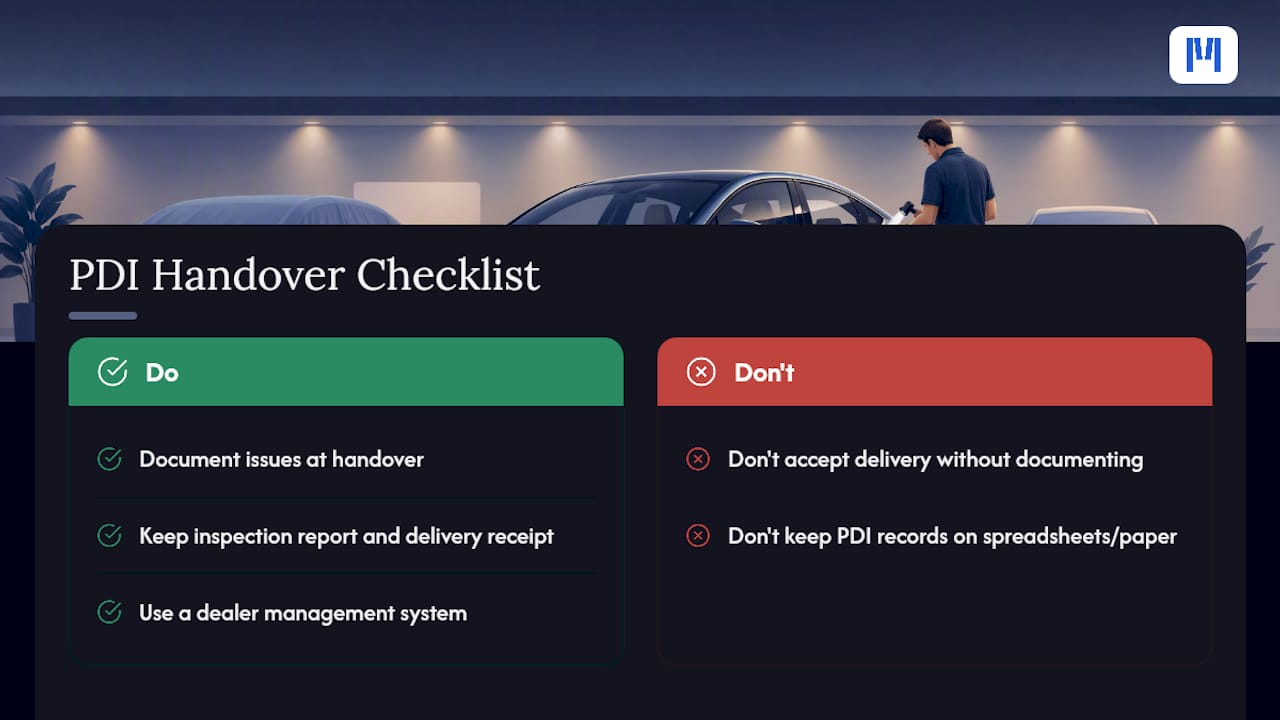
Keep your inspection report and signed delivery receipt in the same place as your registration papers. If a warranty claim arises in the first 12 months, that paperwork establishes the vehicle’s condition at delivery and removes any ambiguity about when a defect first appeared.
For equipment dealerships managing PDI and commissioning workflows at scale, a purpose-built dealer management system for equipment dealers can capture inspection findings, track remedial work orders, and store commissioning documentation against each unit — removing the paper trail problem entirely.
Moderndms is built specifically for Australian equipment dealerships that need to manage the full lifecycle from build order through commissioning and handover, with every document stored and traceable. If your team is still running PDI records on spreadsheets or paper job cards, explore how Moderndms handles commissioning workflows for truck and commercial vehicle dealers.
Sources
- New car pre-delivery check - Consumer Affairs Victoria
- 5 reasons to invest in a pre-purchase car inspection | Carinspect
- Should you invest in a pre-purchase used-car inspection? | Shell Australia
- FCAI inspection guidelines (May 2014)
FAQ
What does a pre-delivery inspection include?
A dealer PDI covers exterior bodywork, interior trim and switches, fluid levels, lights, indicators, HVAC, infotainment, tyres, and all documentation and accessories specified in the purchase contract. Consumer Affairs Victoria recommends buyers verify all of these items personally at handover.
How long does a PDI usually take?
A standard dealer PDI for a new car typically takes 30–60 minutes. An independent pre-purchase inspection that includes a hoist check and diagnostic scan usually runs 45–90 minutes or longer.
What happens if a car fails the PDI?
For a new car, the dealer must rectify defects before handover under the Australian Consumer Law. For a used car, the inspection report gives you documented leverage to request repairs, negotiate a price reduction, or withdraw from the sale.
What is the difference between a PDI and a Carfax report?
A PDI is a physical inspection of the vehicle’s current condition carried out at handover. A Carfax report is a US-based vehicle history service that records past ownership, accidents, and service records — it is not widely used in Australia, where PPSR (Personal Property Securities Register) checks and state-based history reports serve a similar purpose.